FEMA's Damage Assessment Operations Manual expedites decision-making and delivery of assistance by defining national standards for assessing damage and clearly outlining the information considered when evaluating requests for a major disaster declaration.
The National Disaster Recovery Framework establishes a common platform and forum for how the whole community builds, sustains, and coordinates delivery of recovery capabilities.
This document attempts to fill knowledge gaps regarding the role of the private sector in disaster recovery and draws from the wider body of knowledge and from documented experiences of past and present disaster planning and recovery.
This collaboration between Lancaster University and Save the Children researched children and young people’s experiences of the UK winter 2013/14 floods. The authors used creative arts methods to work with flood-affected children and communicate their ideas to policy. Children, in fact are often ignored in disaster-related planning and policy development.
These guidelines are designed to address the needs of women, men, and everyone of diverse gender and sexual identities, including LGBTI people, and to minimise the negative impact of gender stereotypes on all members of the community, in planning for and the delivery of relief and recovery services after emergencies.
This paper describes the experience, challenges, successes and lessons of the Tacloban city government as the city transitioned from the humanitarian response to the recovery and development phases following the disaster.
International Institute for Environment and Development (IIED)
This topic guide is a review of the state of play in post-disaster reconstruction. It builds on extensive research, literature and experience to date, most recently considering outputs from the 2015 Sendai Conference on Disaster Risk Reduction (DRR). It considers the status quo and puts forward alternative positions for facilitating effective reconstruction through a more seamless and re-planned approach.
This framework document encapsulates the vision and strategic objectives that guide recovery in post-earthquake Nepal. It also includes the policy and institutional frameworks for recovery and reconstruction and outlines implementation arrangements, projected financial requirements and immediate next steps necessary for recovery.
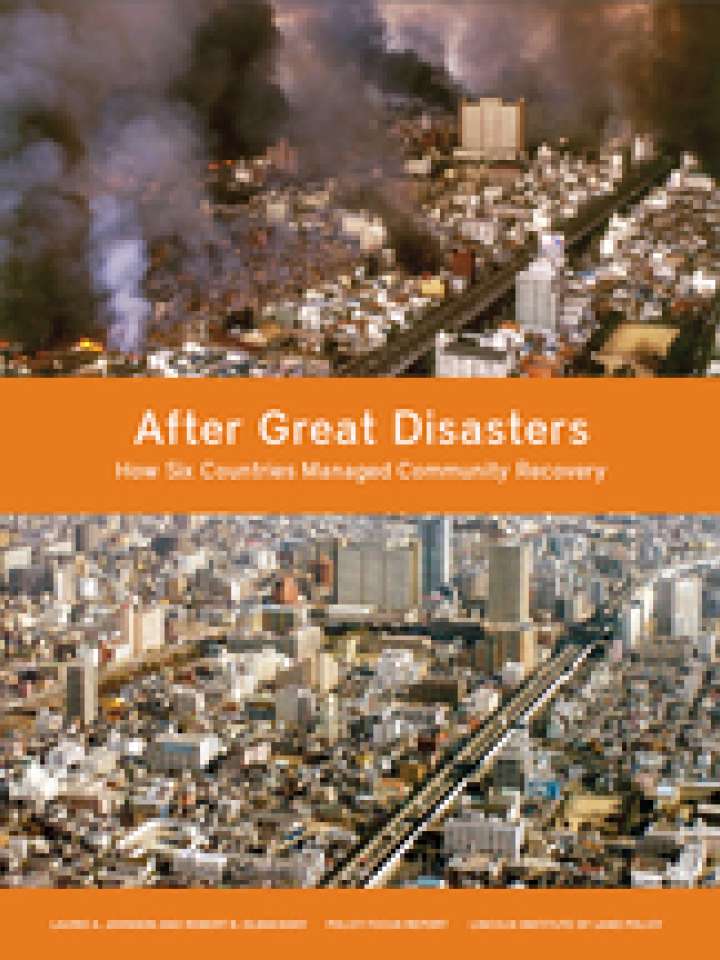
This report identifies lessons from six countries that have faced significant disaster recovery challenges and employed different management approaches: China, New Zealand, Japan, India, Indonesia, and the United States.