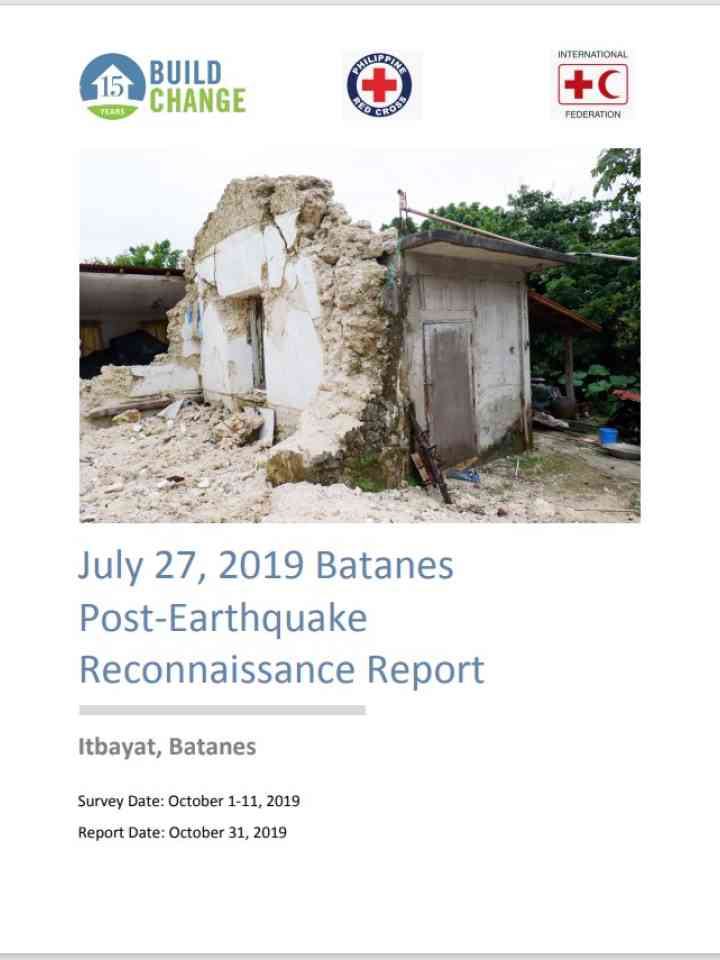
Build Change, with partners Philippine Red Cross, conducted a post-earthquake reconnaissance survey in Itbayat, Batanes following the July 27, 2019 earthquakes.
Build Change, with partners Philippine Red Cross, conducted a post-earthquake reconnaissance survey in Itbayat, Batanes following the July 27, 2019 earthquakes.
Build Change
Philippines Red Cross
International Federation of Red Cross and Red Crescent Societies (IFRC)
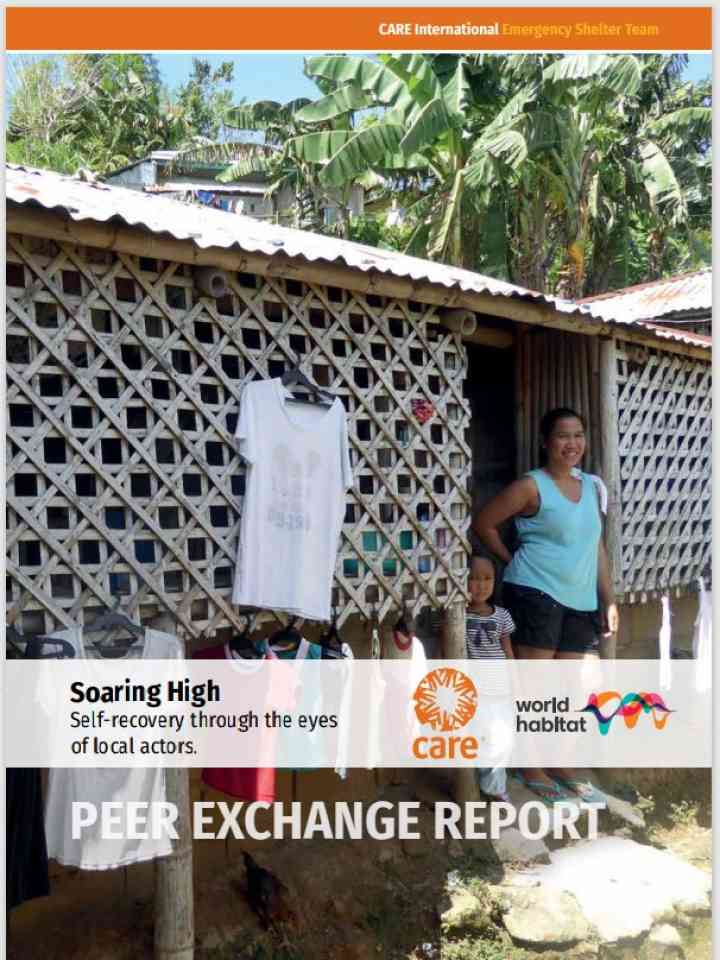
The report reflects on self-recovery from Super-Typhoon Haiyan that is the strongest typhoon ever to make landfall. It displaced more than four million people and destroyed or damaged over one million homes.
Cooperative for Assistance and Relief Everywhere - International Secretariat
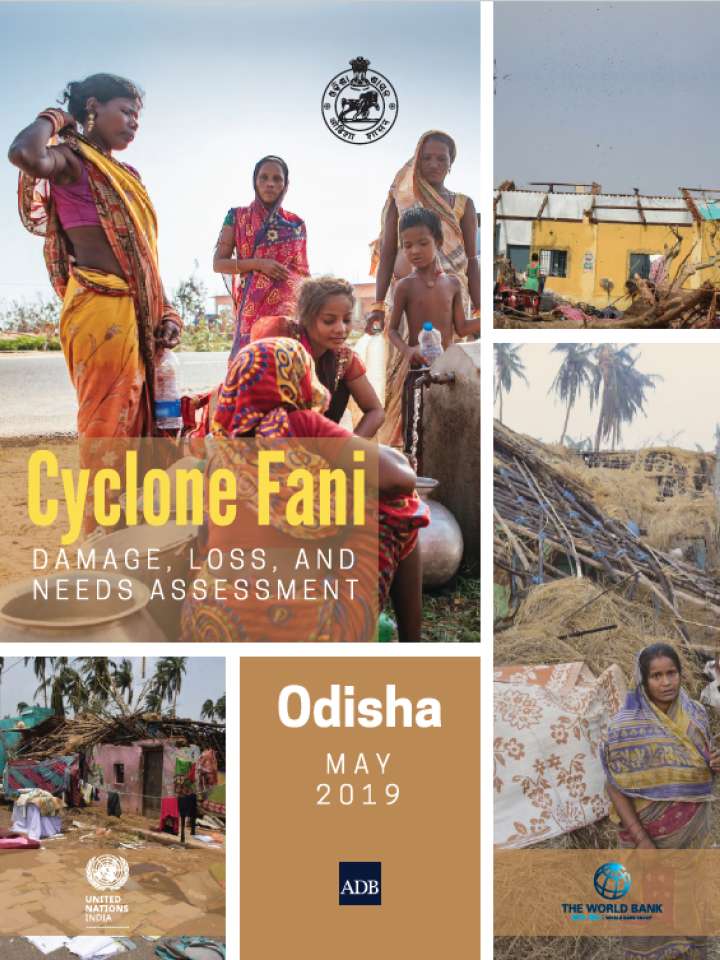
This Damage, Loss, and Needs Assessment (DLNA) of Cyclone Fani in Odisha was conducted between 24 May and 4 June 2019. Covering the 14 affected districts in the state, it presents estimates of the damage, loss, and recovery needs across 15 sectors.
World Bank, the
United Nations Development Programme (UNDP)
Asian Development Bank (ADB)
Global Facility for Disaster Reduction and Recovery, the (GFDRR)
This issue brief discusses how to ensure equal access to disaster response and recovery efforts, offering specific policy recommendations that would help ensure that the most vulnerable communities and populations receive the support they need.
This study aimed to statistically examine how the content and channels influence the activities of households in developing country rural communities to recover from disasters.
This study draws on the experiences and perspectives of households recovering from Typhoon Haiyan (Philippines 2013) and the Gorkha Earthquake (Nepal 2015). It reflects on challenges faced by households to self-recover from major disasters in urban environments, their interactions with humanitarian agencies, national and local institutions, infrastructures, markets and communities, and the influence of national and local governments’ policies and practices on self-recovery opportunities.
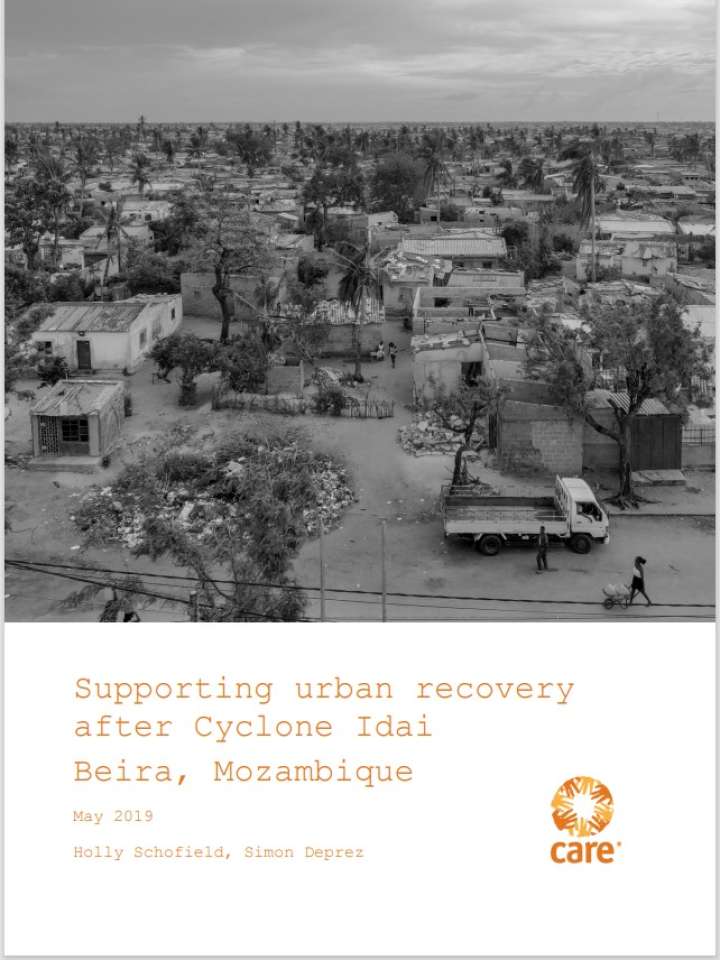
This paper presents the findings from a real time research project which sought to understand the impact of Cyclone Idai on urban households and communities as well as the options for shelter actors seeking to support their recovery.
IRP Herald Volume 28 serves as the knowledge report for the workshop “Towards Coherent Disaster Risk Reduction Strategy Development, Implementation and Monitoring among the SAARC Member States.
This article explores the spatial differentiation and integration between the post-disaster victims and the indigenous peasants 8 years after a rapid off-site resettlement oriented by governments in New Beichuan. Data were broadly collected from placement