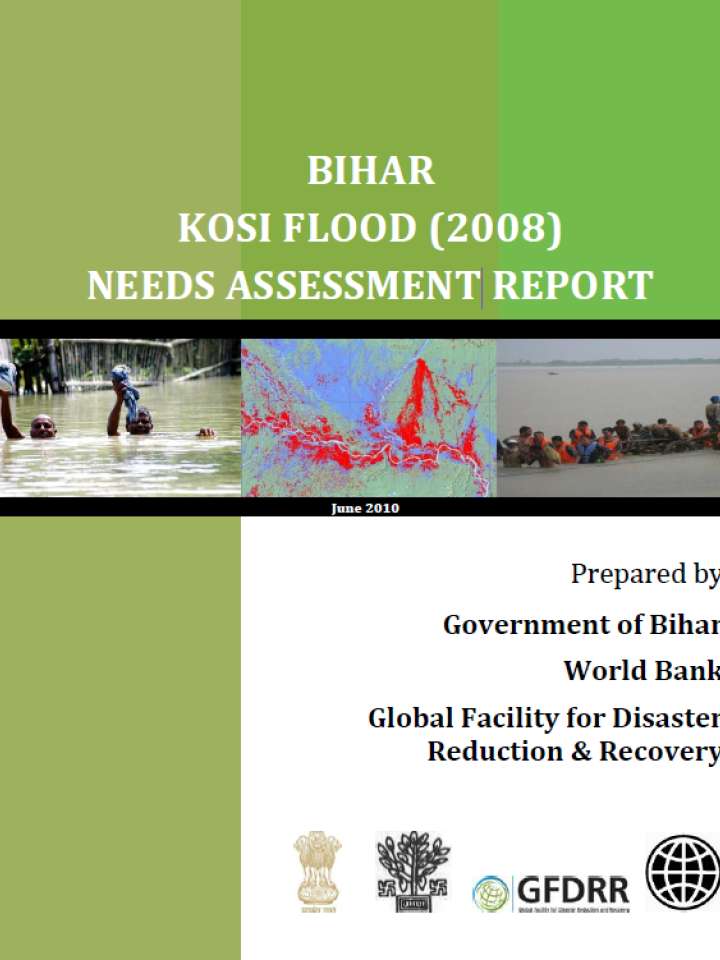
This Needs Assessment guides the design and investment prioritization of the proposed Kosi Flood Recovery project. It provides a damage overview in key sectors to identify priority interventions and progress made.
World Bank, the
Global Facility for Disaster Reduction and Recovery, the (GFDRR)
Este manual se ha realizado, por lo tanto, con el propósito de que sirva como una guía técnica idónea en donde se presentan alternativas de intervención o rehabilitación sísmica para disminuir la vulnerabilidad de las edificaciones existentes de adobe y
The aim of the assessment is to identify priority areas to support the Government of Bangladesh in cyclone recovery efforts as well as to design a disaster management strategy.
Bangladesh - government
World Bank, the
European Commission
International Labour Organization (ILO)
International Federation of Red Cross and Red Crescent Societies (IFRC)
Asian Development Bank (ADB)
United Nations Development Programme (UNDP)
Japan Bank For International Cooperation
Japan International Cooperation Agency
Islamic Development Bank
Food and Agriculture Organization of the United Nations (FAO)
World Food Programme (WFP)
World Health Organization (WHO)
Department for International Development
United States Agency for International Development (USAID)
Consise set of guidelines detailing the reconstruction of housing affected by 2004 Indian Ocean and Tsunami. Main sections include: disaster and effects, construction and planning aspects for resistance against disasters, retrofitting of exiting buildings, repairs and strengthening of buildings.
Newsletter: Housing by people in Asia, no. 16, August 2005
Among the tsunami’s victims were tourists, tycoons, a prince and many ordinary traders, workers, pilgrims and families enjoying their day off. But it was overwhelmingly the poor who suffered the
As Plan’s commitment to the communities and children in India, Indonesia, and Sri Lanka reaches the halfway stage, 2 years after the disaster, this report scrutinizes goals achieved, and the factors responsible for their achievement: the psychosocial
One of the areas of importance to effective risk reduction lies in the provision of safe, structurally secure shelter, which is closely related to the sustainability issues of the type of construction, for example. It is important for the reconstruction
This manual explains how the choice of appropriate design and construction methods and sustainable materials and technologies during the planning, implementation and maintenance phases of reconstruction can protect natural resources and reduce energy consumption and pollution. Sustainable reconstruction management provides numerous environmental, safety and financial benefits.