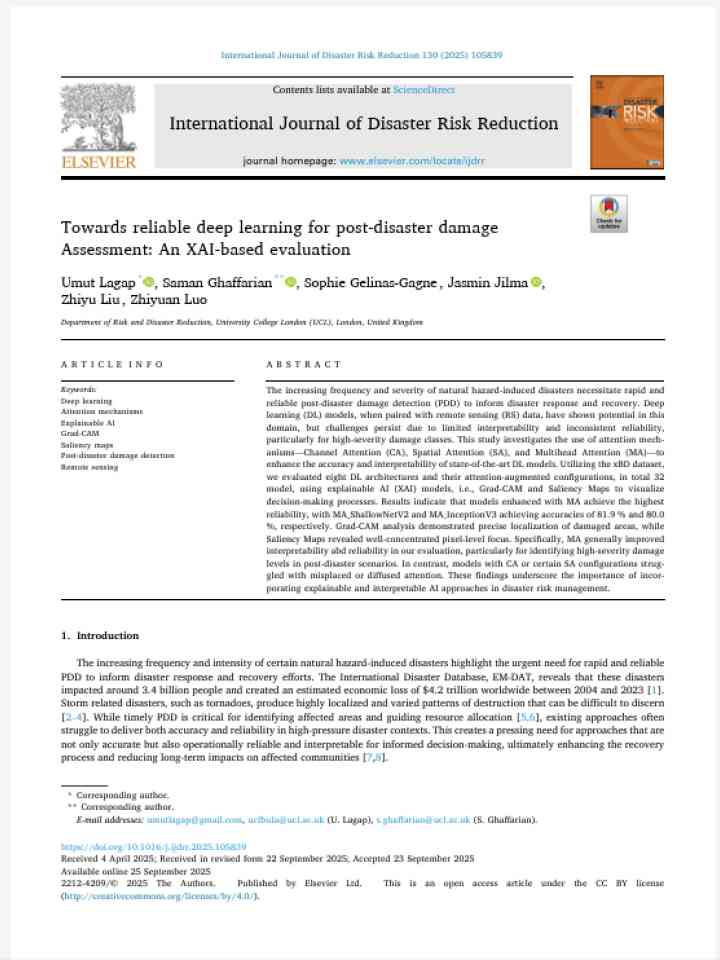
This study evaluates how attention mechanisms and explainable AI (XAI) techniques can improve the reliability and interpretability of deep learning models for post-disaster building damage assessment using satellite imagery.
International Journal of Disaster Risk Reduction (Elsevier)
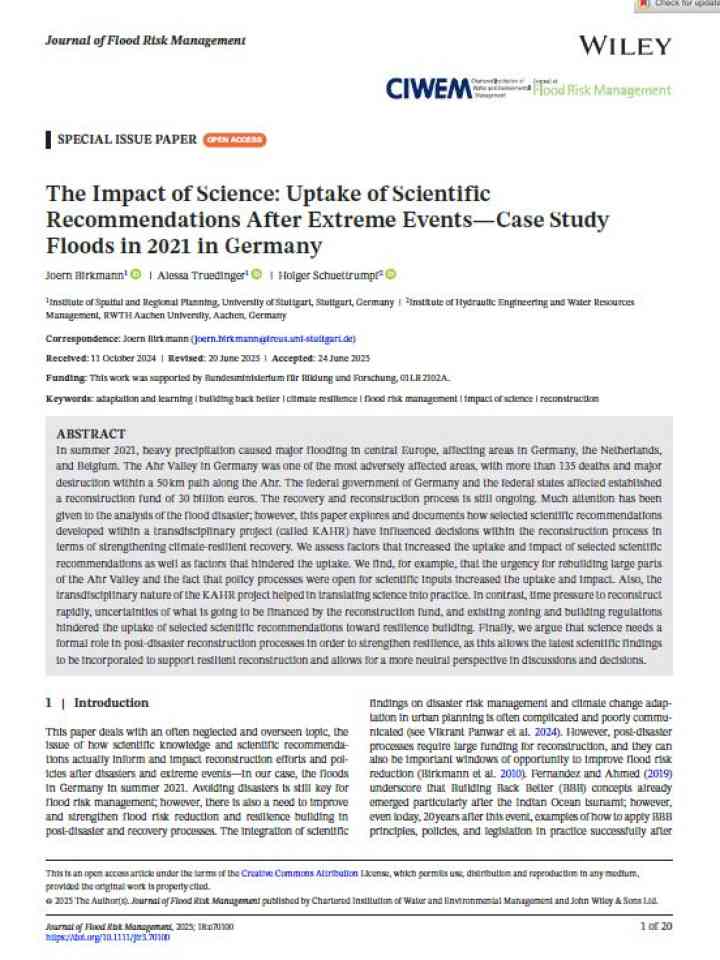
This paper explores and documents how selected scientific recommendations developed within a transdisciplinary project have influenced decisions within the reconstruction process following the 2021 floods in Germany.
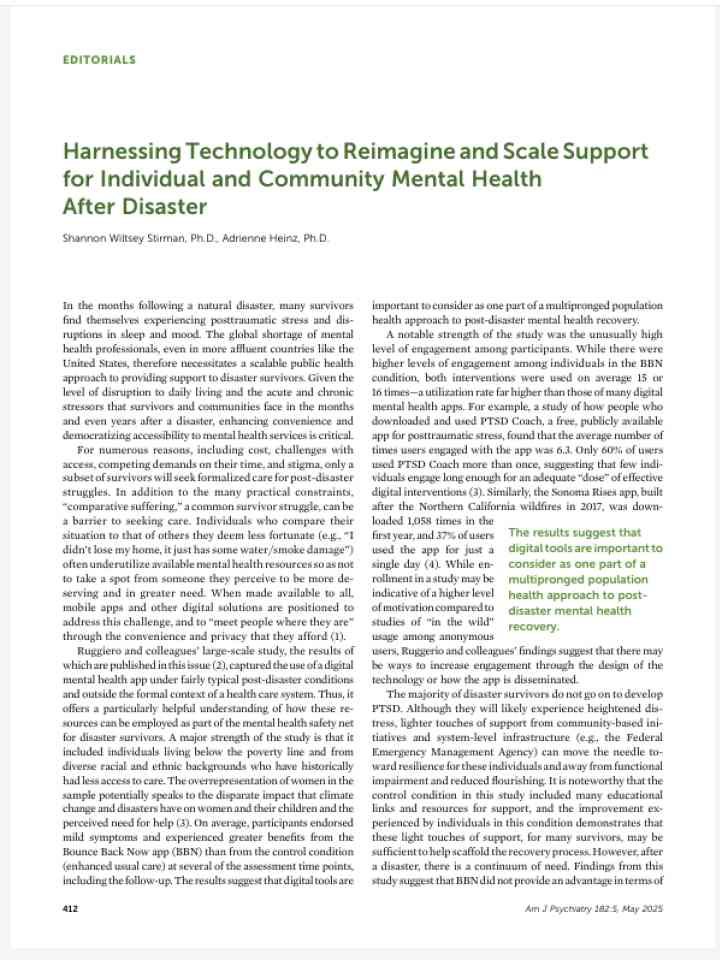
This editorial highlights how digital mental health tools, like mobile apps, can support disaster survivors by offering scalable, accessible care to promote recovery and resilience.
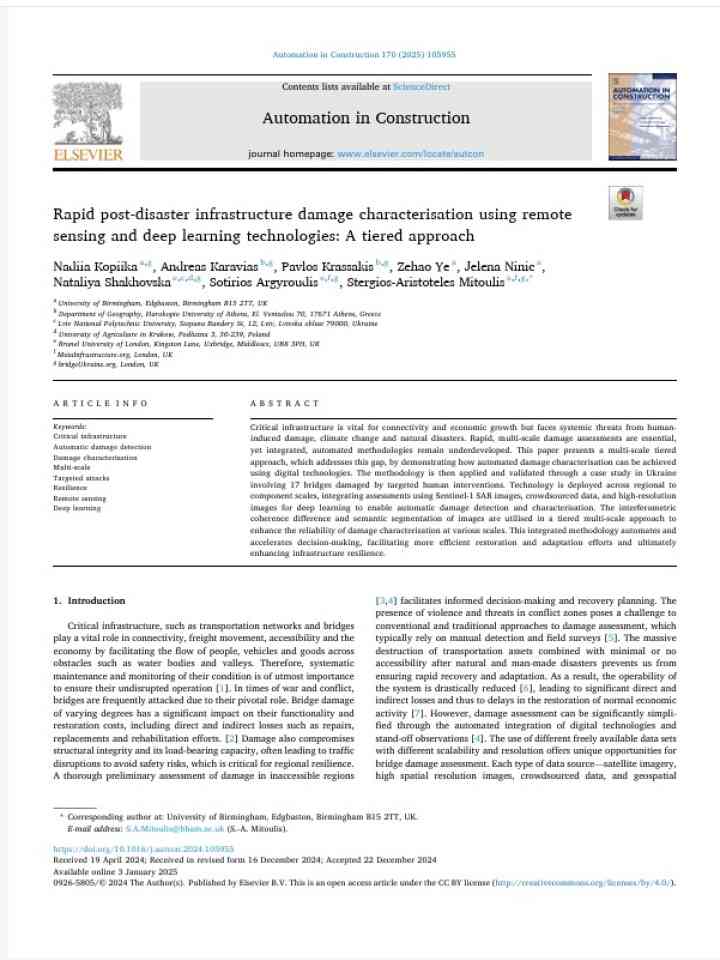
This paper presents a multi-scale tiered approach to post-disaster infrastructure characterisation, demonstrating how automated damage characterisation can be achieved using digital technologies.
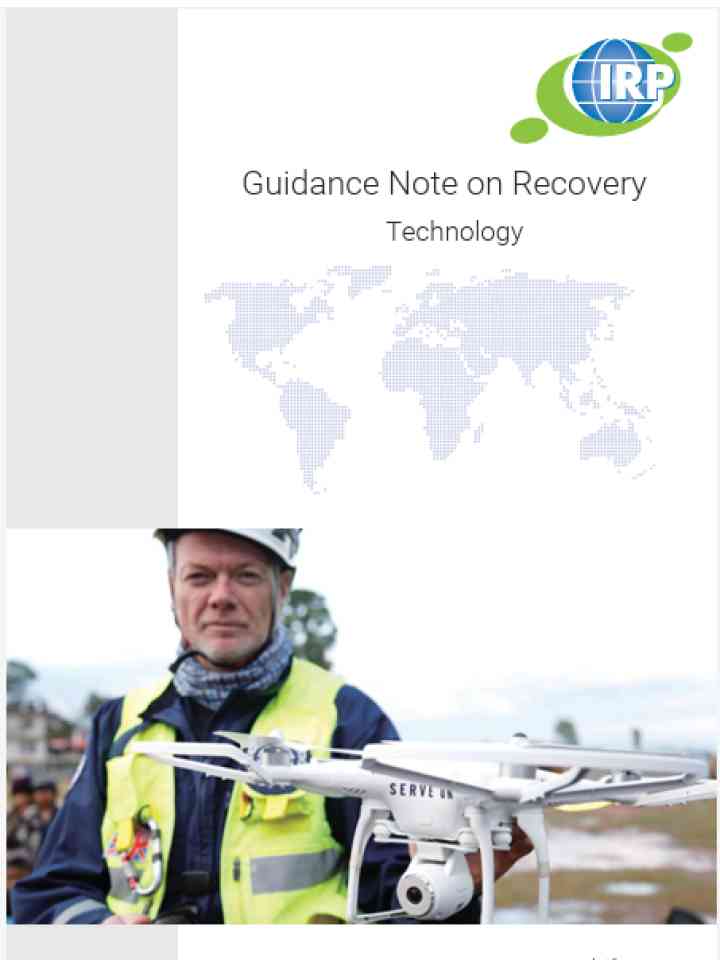
A resource on the role of technology in disaster recovery. This guidance note explores how digital tools, data, and innovation support recovery planning, assessments, and rebuilding efforts.
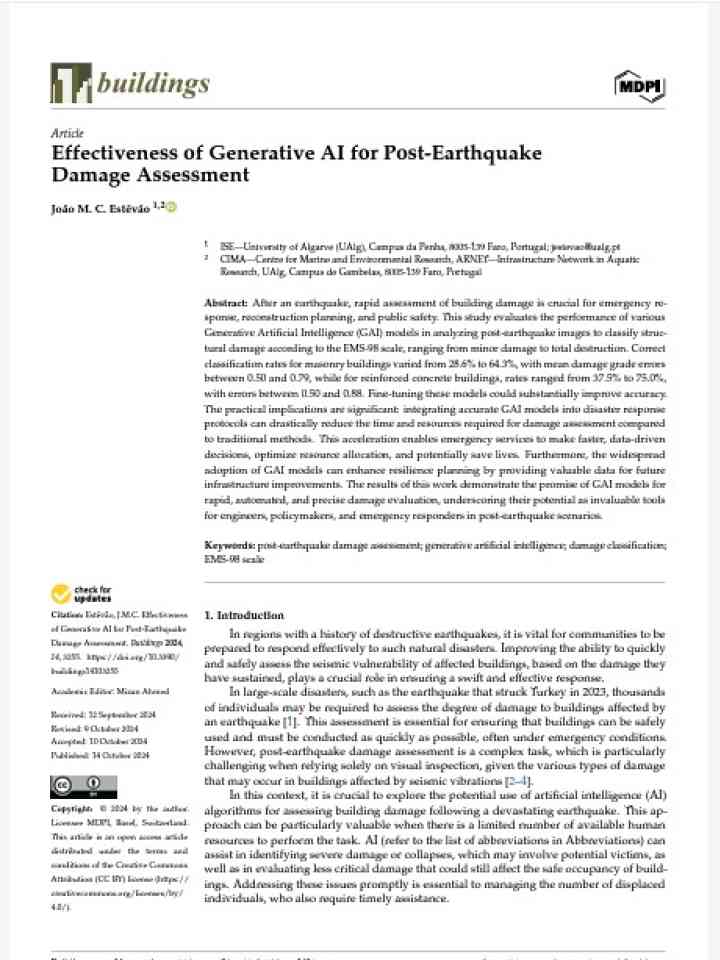
This study evaluates the performance of various Generative Artificial Intelligence (GAI) models in analyzing post-earthquake images to classify structural damage according to the EMS-98 scale, ranging from minor damage to total destruction.
The dataset provides comprehensive information on the inundation and run-up heights from the tsunami triggered by the 2024 Noto Peninsula earthquake in Japan, compiled from extensive post-event surveys.
This document provides a detailed review of the current state of knowledge and frontier issues related to building back better in recovery. This paper was developed to contribute to the dialogue at the July 2023 meeting of the G20 DRR Working Group.
Asian Development Bank (ADB)
United Nations Office for Disaster Risk Reduction (UNDRR)
The Guidelines were designed to support ASEAN Member States in establishing their regional and national transport connectivity recovery plans with a focus on resilience and sustainability.