Social protection policy has been become one of the Indonesian government’s main political discourses and policy instruments. However, there is a lack of concern regarding social protection for citizens affected by natural disasters that cause adverse
This report sets out to assess the efficiency and effectiveness of recovery governance in Queensland, and to identify enhancements that would lead to better local-level community recovery and community outcomes. The expectations statement sets the
Office of the Inspector-General Emergency Management, the
This article explores the spatial differentiation and integration between the post-disaster victims and the indigenous peasants 8 years after a rapid off-site resettlement oriented by governments in New Beichuan. Data were broadly collected from placement
The village/town-university collaboration provides the Sendai Framework for Disaster Risk Reduction with a model for developing a multi-disciplinary and multi-hazard approach to public DRR policy during the recovery phase of a nuclear accident.
United Nations Office for Disaster Risk Reduction (UNDRR)
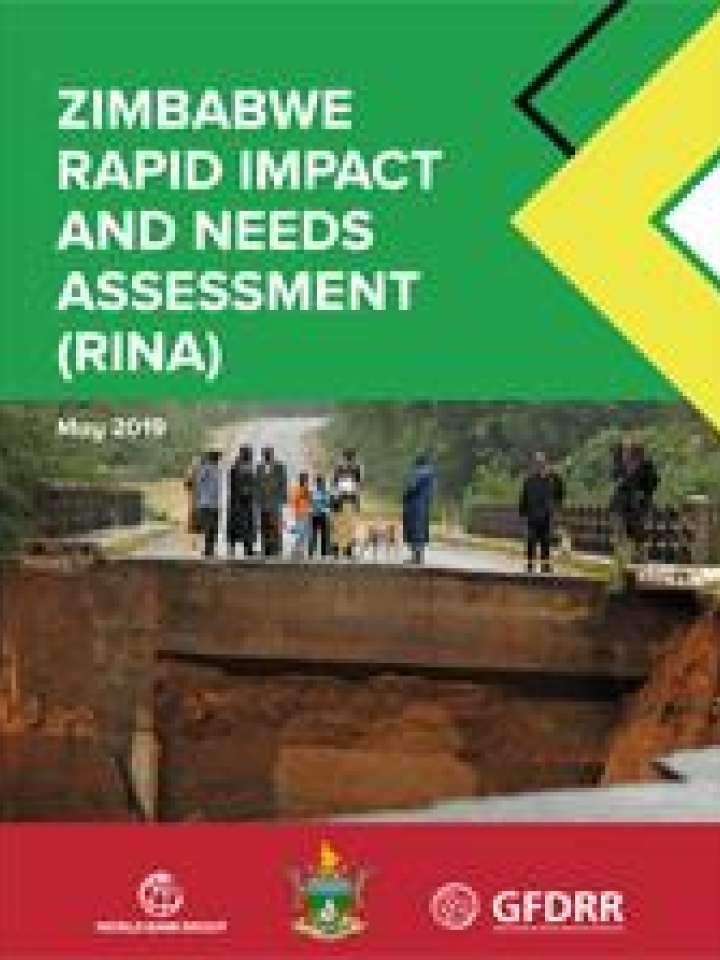
The Zimbabwe Rapid Impact and Needs Assessment (RINA) is an effort to assess and quantify cyclone recovery and resilience building needs across ten sectors.
World Bank, the
Global Facility for Disaster Reduction and Recovery, the (GFDRR)
The goal of this paper is to examine how government continuity planning contributes to strengthening the public sector’s disaster preparedness, resulting in enhanced resilience of the public sector. The paper analyzes basic principles of government continuity planning using Complex Adaptive Systems (CAS) theory while summarizing recent developments in theory and practice of government continuity planning. Government continuity plans (GCPs) are a recently focused concept in disaster preparedness, compared to business continuity plans (BCPs) in the private sector. Both GCPs and BCPs are designed to prepare governments and businesses for future disasters. The need for BCPs was widely recognized after the Great East Japan Earthquake (GEJE) and Tsunami in 2011, the Floods in Thailand in 2011, and Hurricane Sandy in New York in 2012.
United Nations Office for Disaster Risk Reduction (UNDRR)
Resilience against infrastructure failure is essential for ensuring the health and safety of communities during and following natural hazard situations. Understanding how natural hazards impact society in terms of economic cost, recovery time, and damages
World Bank, the
Global Facility for Disaster Reduction and Recovery, the (GFDRR)
The urban reconstruction principles, goals and basic policies mentioned in this document will be used to implement programs and refine its reconstruction guidelines and plans when Tokyo suffers damage from natural disaster.
This report was presented as a statement before the Committee on Homeland Security. It discusses, among other things, FEMA’s progress and challenges related to disaster resilience, response, recovery, and workforce management.