This document discusses how almost six years after the 2011 Great East Japan Earthquake, despite the overall good recovery progress, some areas have lagged behind and 134,000 evacuees continue to live in displacement. Prolonged and protracted displacement has had profound and disproportionate impacts on the more vulnerable members of society, particularly older people.
This Primer introduces engineering and development professionals to the basic steps in the process of planning and executing post-disaster seismic retrofit of housing projects funded by the United States Agency for International Development (USAID). It is intended to provide USAID officers and host country officials with the steps, principles, and best practices that need to be taken to carry out safe and effective housing retrofit in a post-disaster situation.
United States Agency for International Development (USAID)
The PDNA report covers the damage, losses, and recovery needs across various sectors following Hurricane Maria in 2017. A recovery strategy and summary of identified priority actions for recovery is included in the report.
Dominica - government
Global Facility for Disaster Reduction and Recovery, the (GFDRR)
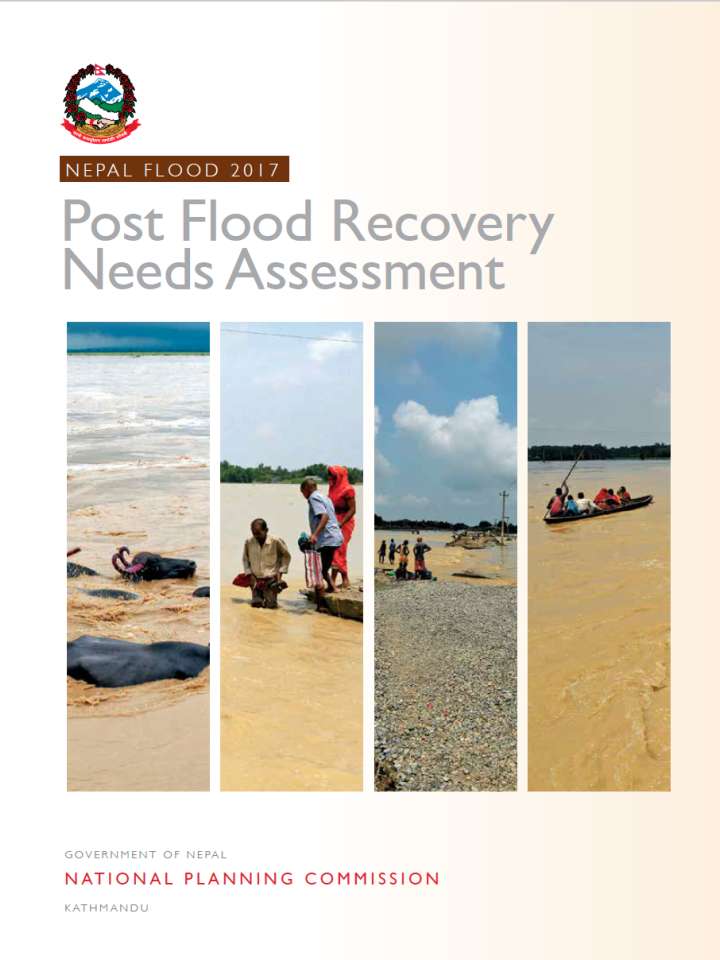
The Post Flood Recovery Needs Assessment offers an objective basis for recovery planning and measures for reducing future risks. It estimates the impact of the 2017 floods that affected the Terai region and to identify medium-term recovery needs.
Nepal - government
Global Facility for Disaster Reduction and Recovery, the (GFDRR)
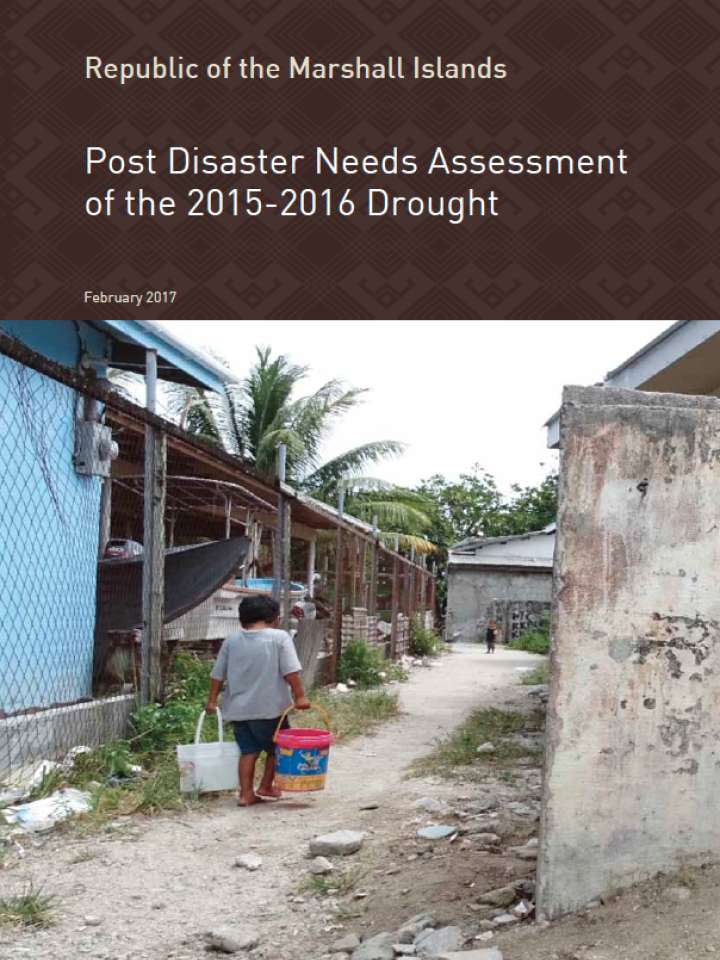
This report is a rapid socio-economic assessment of the sectors impacted by the 2015-2016 drought in the Republic of the Marshall Islands. This assessment is the first PDNA of a drought in the Pacific.
Marshall Islands - government
Global Facility for Disaster Reduction and Recovery, the (GFDRR)
This Primer covers the basic steps in the process of selecting a model for planning and executing post-disaster housing reconstruction projects funded by the United States Agency for International Development (USAID). It is intended to provide USAID officers and Host Country officials with the steps, principles, and best practices that need to be taken to carry out housing construction and reconstruction properly in a post-disaster situation. This document provides a roadmap for developing a project through planning, design, and implementation.
United States Agency for International Development (USAID)
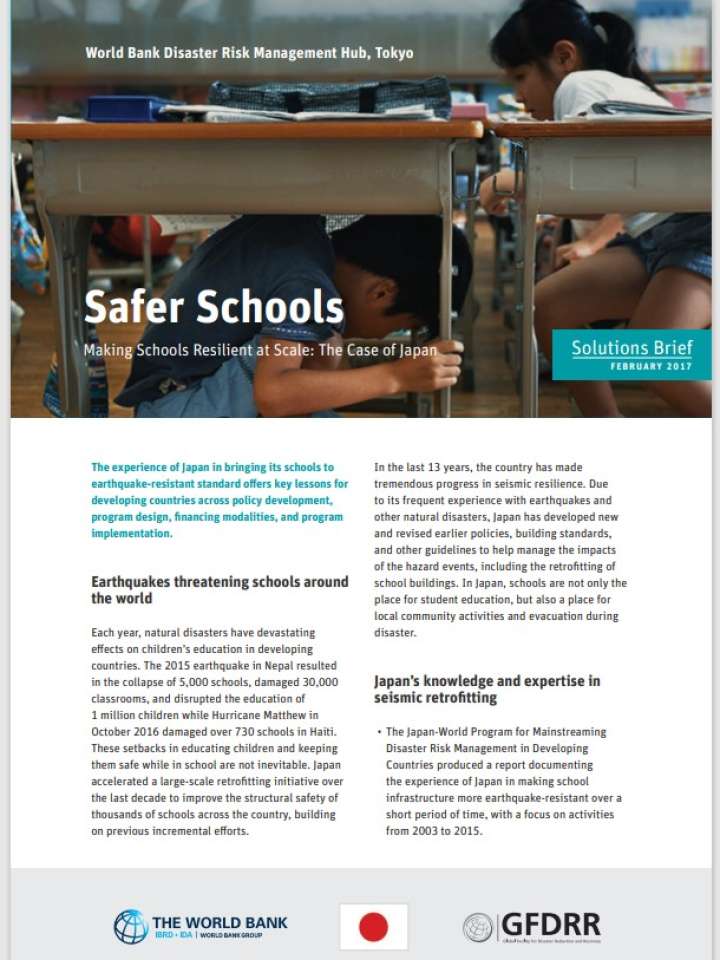
This is about the program implemented by Japan’s Ministry of Education, Culture, Sports, Science and Technology (MEXT) to improve the structural safety of thousands of schools across the country.
World Bank, the
Global Facility for Disaster Reduction and Recovery, the (GFDRR)
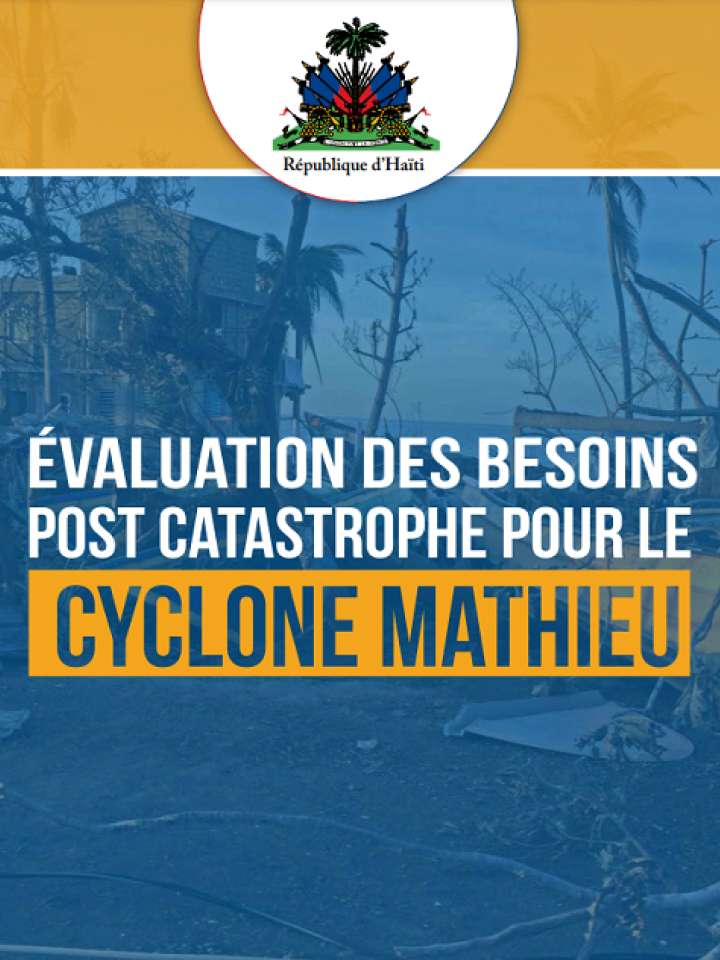
This 2016 Haiti post-disaster needs assessment reports on the damage caused by the cyclone Mathieu and incurred needs and costs and presents the recommended recovery strategy for an adequate response to the post-disaster situation.