This Strategic Framework 2016–20 articulates the way forward in increasing knowledge, capacity building and advocacy, partnerships and investments, as part of a collective struggle toward disaster and climate resilient development in Africa. The Framework
World Bank, the
Global Facility for Disaster Reduction and Recovery, the (GFDRR)
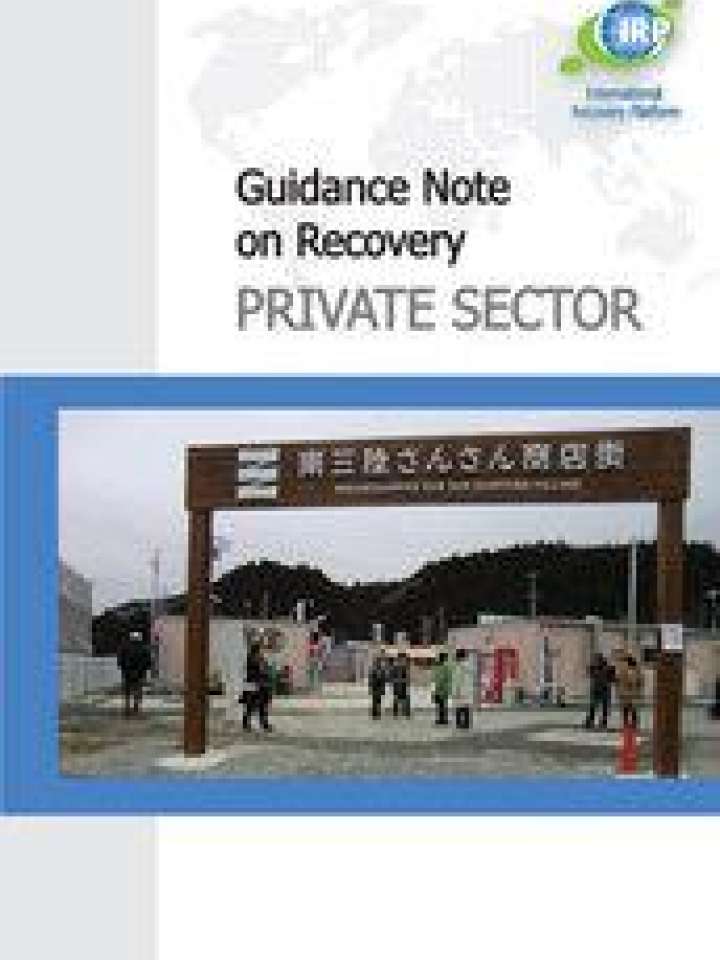
This document attempts to fill knowledge gaps regarding the role of the private sector in disaster recovery and draws from the wider body of knowledge and from documented experiences of past and present disaster planning and recovery.
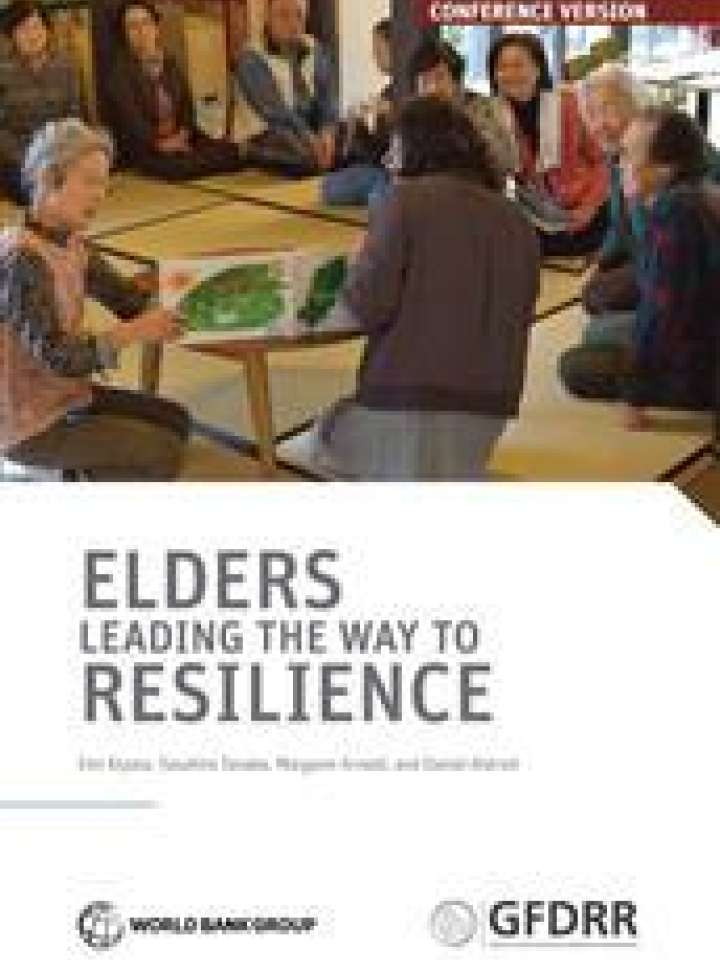
This report describes and assesses the experience of Ofunato, Japan, which was devastated by the 2011 Great Eastern Japan Earthquake. With facilitation by the NGO Ibasho, elders and other community members planned and built the Ibasho Café, which now acts as a hub that is restoring the fabric of a community still badly damaged by the disaster. This report provides lessons learned that are applicable to other actors that want to support community-driven approaches that empower elders to contribute to their communities and strengthen resilience.
World Bank, the
Global Facility for Disaster Reduction and Recovery, the (GFDRR)
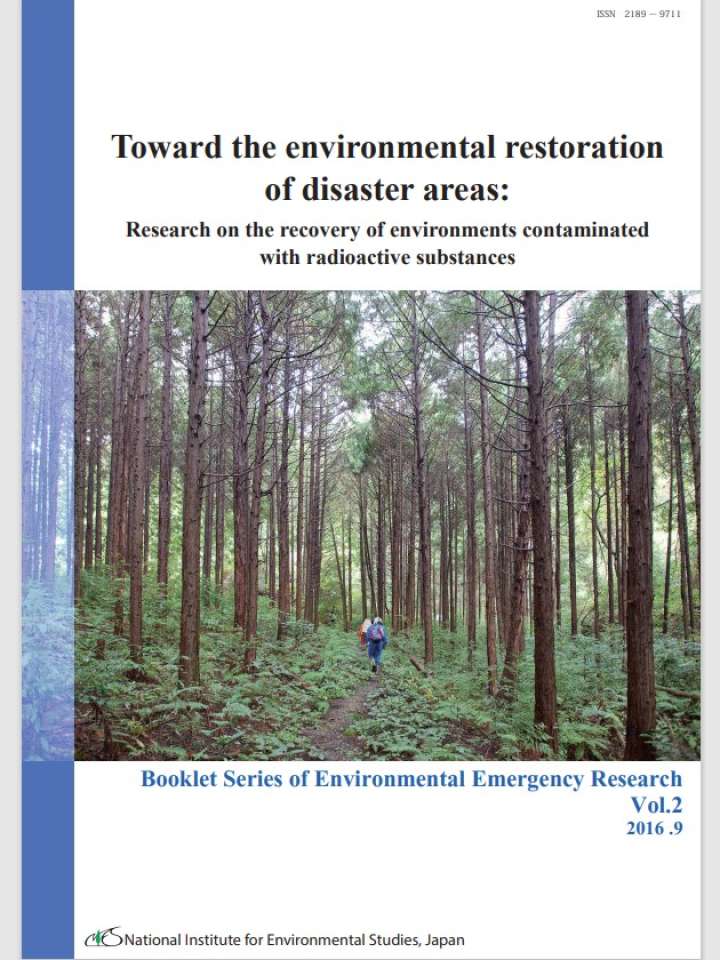
This publication introduces NIES' research on recovery efforts following the GEJE of environments contaminated with radioactive substances, as well as plans for further research in this area.
National Institute for Environmental Studies (NIES)-Japan
This paper discusses various strategies and approaches on post-disaster shelter construction, especially regarding transitional shelter, and presents case studies from Bangladesh, India, Pakistan, Indonesia, the Philippines and Haiti.
This report presents the findings from Work Package 3 (WP3, Vulnerability) of the STREVA (Strengthening Resilience in Volcanic Areas) project’s research conducted in the communities surrounding La Soufriere Volcano in the island of St. Vincent, West
This collaboration between Lancaster University and Save the Children researched children and young people’s experiences of the UK winter 2013/14 floods. The authors used creative arts methods to work with flood-affected children and communicate their ideas to policy. Children, in fact are often ignored in disaster-related planning and policy development.
This paper was informed by discussions among the participants at the Disaster Preparedness Forum held in Hanoi, Vietnam, on 2 July 2015. The paper provides insights into four partnerships in which businesses contribute to addressing disaster preparedness
These guidelines are designed to address the needs of women, men, and everyone of diverse gender and sexual identities, including LGBTI people, and to minimise the negative impact of gender stereotypes on all members of the community, in planning for and the delivery of relief and recovery services after emergencies.
This regional framework has been developed to provide an integrated approach to address climate and disaster risks. The framework recognises the clear overlaps between climate change adaptation and disaster risk management, and the similar tools and