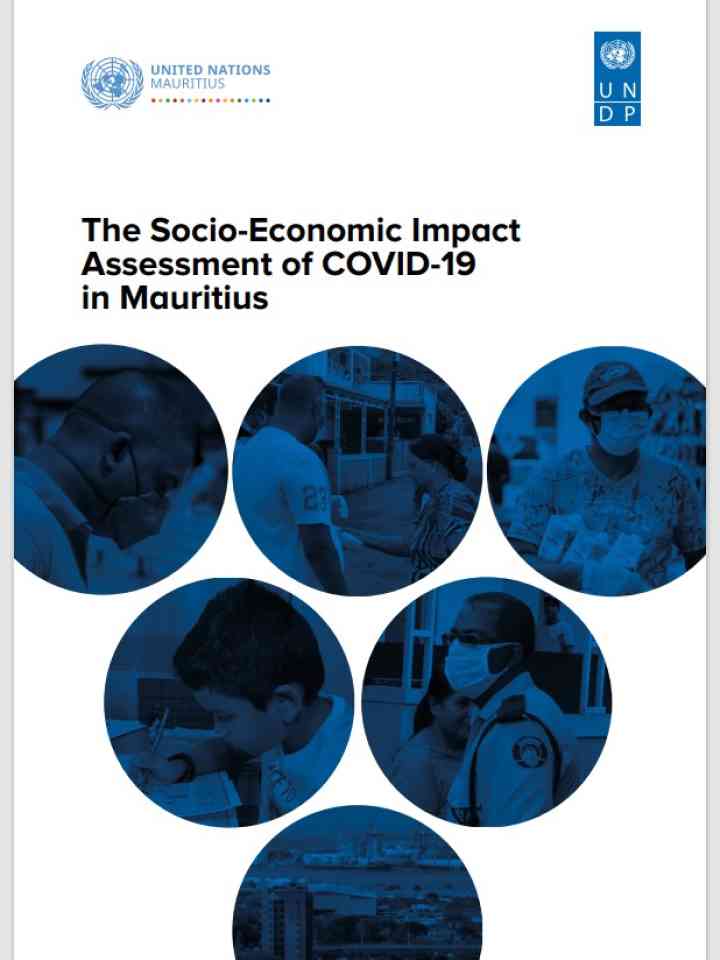
This report assesses the pandemic's widespread socioeconomic effects in the Mauritius. It stresses the importance of government support and targeted interventions for recovery and resilience.
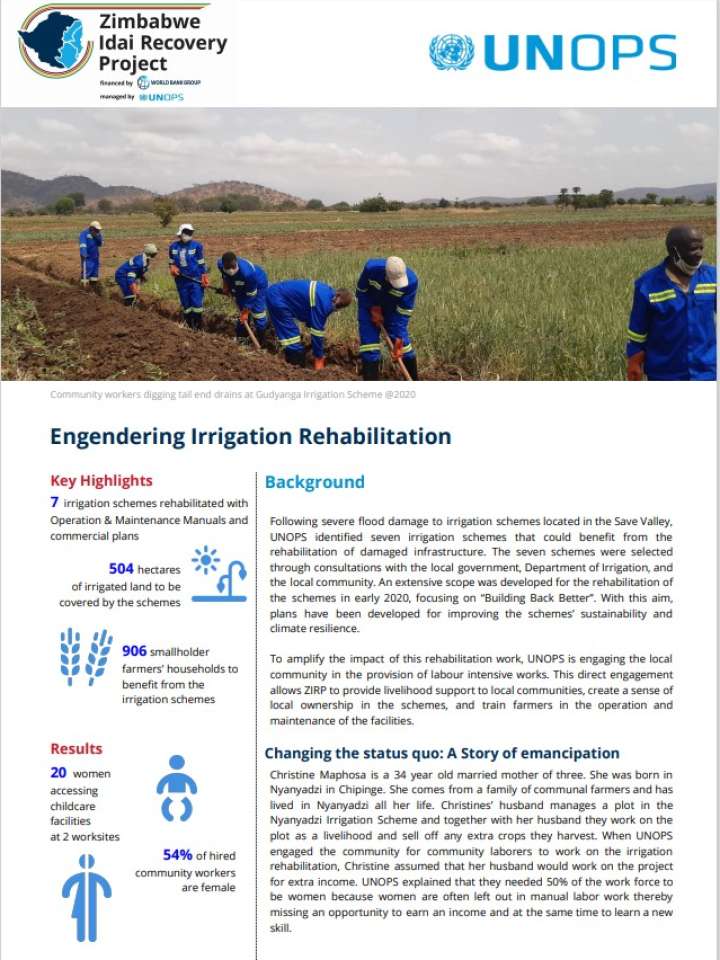
This is a project report for the the Zimbabwe Idai Recovery Project (ZIRP), on revitalization of irrigation schemes in Zimbabwe's Save Valley. The project aims to enhance livelihoods, focusing on sustainability, climate resilience, and gender inclusivity.
United Nations Office for Project Services (UNOPS)
World Bank, the
Global Facility for Disaster Reduction and Recovery, the (GFDRR)
This compendium brings together expert knowledge, analyzes key recovery case studies, and extracts lessons and know-how from ten years of recovery experience from the Great East Japan Earthquake and Tsunami.
This is a consolidated resource intended to assist individuals, families, and communities as they prepare for and recover from a wildfire, and then determine next steps in planning for post-wildfire hazards and navigating the recovery process.
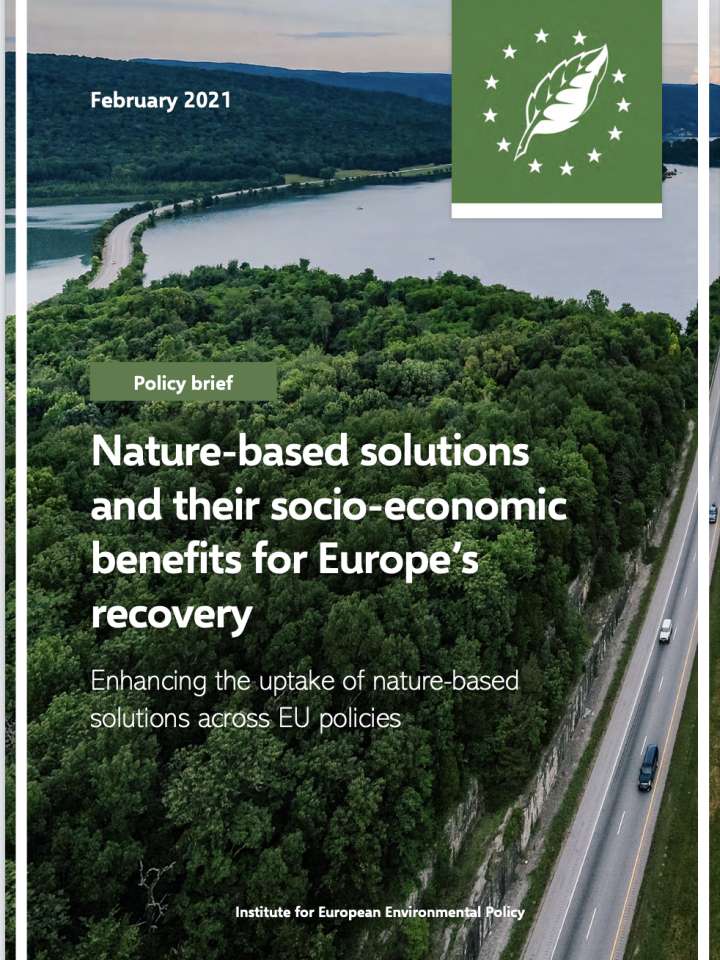
This briefing provides an overview of the wide range of socio-economic benefits that nature-based solutions can achieve alongside addressing the intertwined climate change and biodiversity loss crises. The briefing highlights the central role these
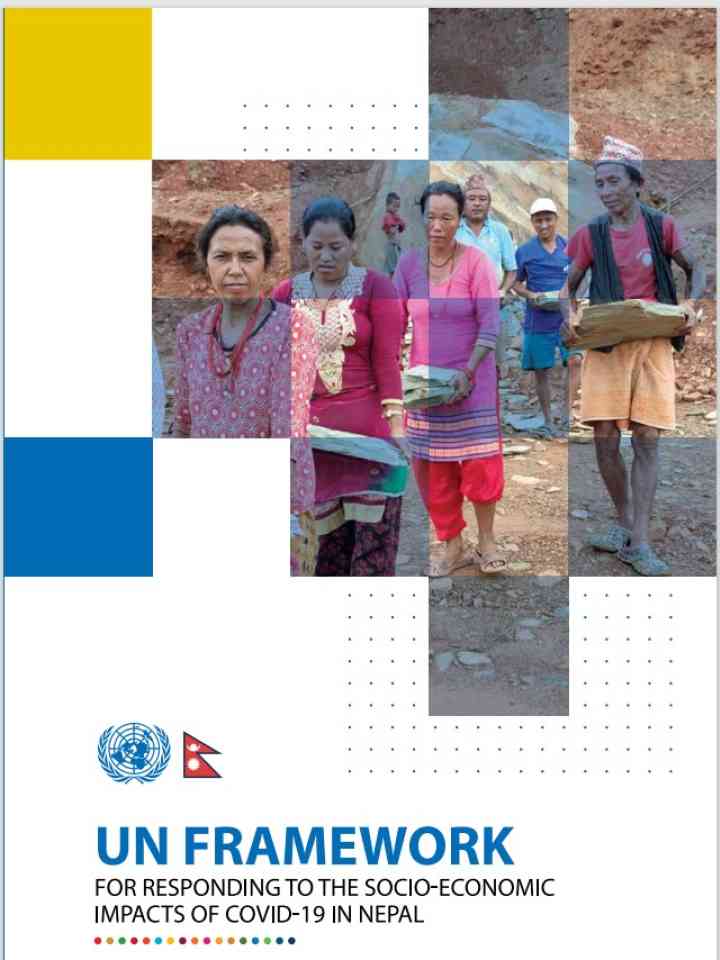
The UN has designed the Framework for Responding to the SocioEconomic Impacts of COVID-19 in Nepal. The Framework is anchored in government priorities, as articulated by planning and budgeting documents at the national and provincial levels.
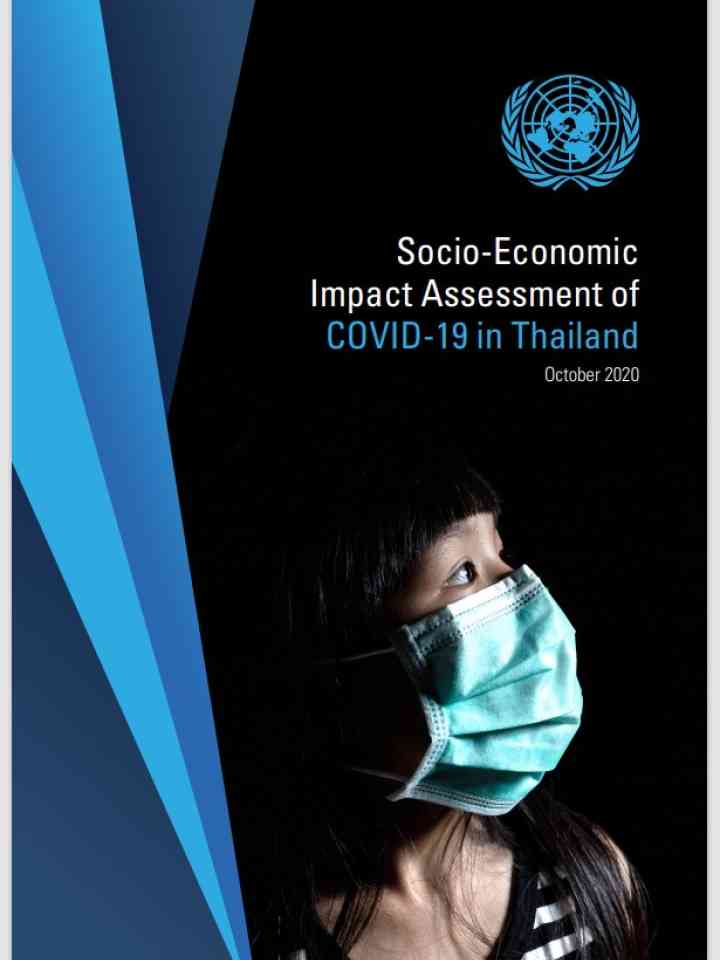
This report assesses the impacts of the pandemic on Thailand’s economy and progress in achieving the SDGs and to recommend actions and policy options to rebuild the economy from the perspective of SDGs.
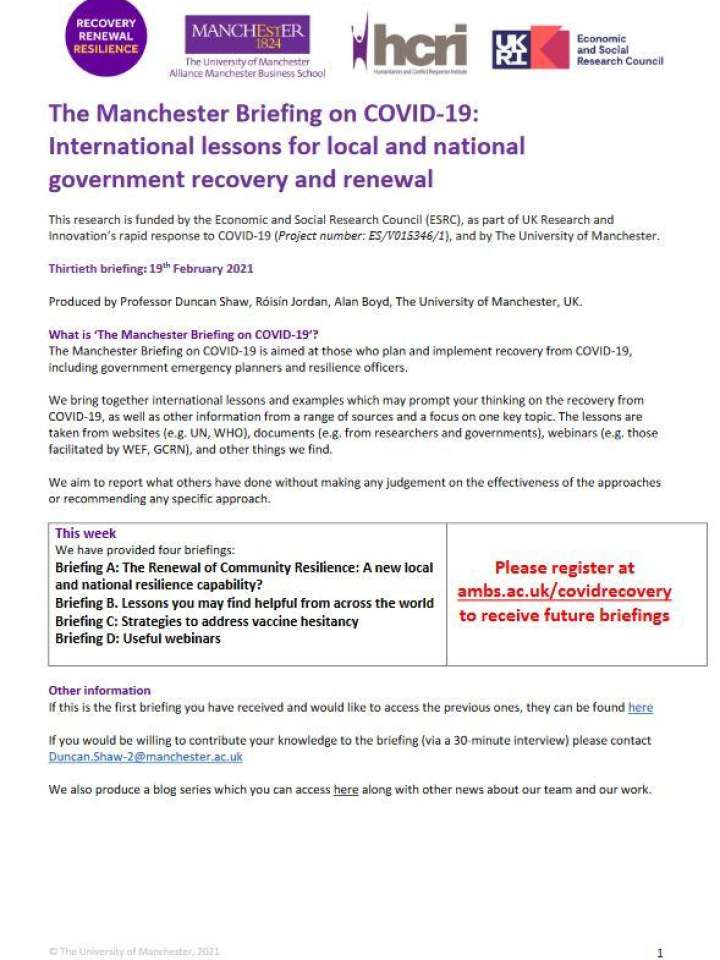
The Manchester Briefing (Issue 30) calls to establish community resilience as a new local and national resilience capability. This is a major opportunity to renew local resilience by continuing the community action built during the pandemic.