This report addresses how the United States should pursue legislation and policies to ensure that the country revitalizes its critical infrastructure and manufacturing base, reduce serious offshore dependencies and attendant vulnerabilities, and build the
This document presents the key lessons learned from a team of experts reassembled to evaluate Japan’s long-term efforts to recover from the Great Eastern Japan Earthquake and to prepare for future catastrophes. Based on extensive literature and interviews with Japanese officials and experts, it identifies four critical areas that affect response to a catastrophe: (i) recovery and resiliency of critical infrastructure, (ii) environmental remediation, (iii) compensation and disaster assistance, and (iv) population resiliency. In each area, it makes key observations, determines findings, and develops recommendations for learning from Japan’s experience.
This year’s annual report features a detailed analysis of the cumulative impact and results GFDRR has achieved over the five-year period since its inception in 2006. Based on advice received from its Consultative Group (CG) over the last year, the
Global Facility for Disaster Reduction and Recovery, the (GFDRR)
This study focuses on the 2006 landslide tragedy in the Philippines, where an entire community, including its people, its productive assets, and its socio-cultural resources, was totally buried. It reports on the various levels of recovery that have been achieved among the provision of community services and facilities such as health, education, recreation, infrastructure, livelihood opportunities and psychosocial services; and identifies the limitations of the principle of "build back better" as well as those areas of concern in which the principle can best be applied.
This special issue of the quarterly ERRA newsletter focuses on the major earthquake that struck northern Pakistan on October 8, 2005. It describes the response to the disaster, followed by the establishment of the Earthquake Reconstruction and
Earthquake Reconstruction and Rehabilitation Authority
This PDNA assesses the damage, losses, and needs for recovery in key social, infrastructure, and productive sectors as a result of the tropical storm Sendong. Policy and program recommendations for governance and disaster risk reduction are also provided.
This position paper explains the need for drylands recovery and development in the Horn of Africa through community control and empowerment, education and pro-poor infrastructure. It asserts that if focus could be shifted to long term resiliency measures
Food and Agriculture Organization of the United Nations (FAO)
United Nations Office for the Coordination of Humanitarian Affairs
This plan identifies systematic measures that the municipal government and citizens should jointly implement in an organized manner for the earliest possible restoration and recovery from the Great East Japan Earthquake.
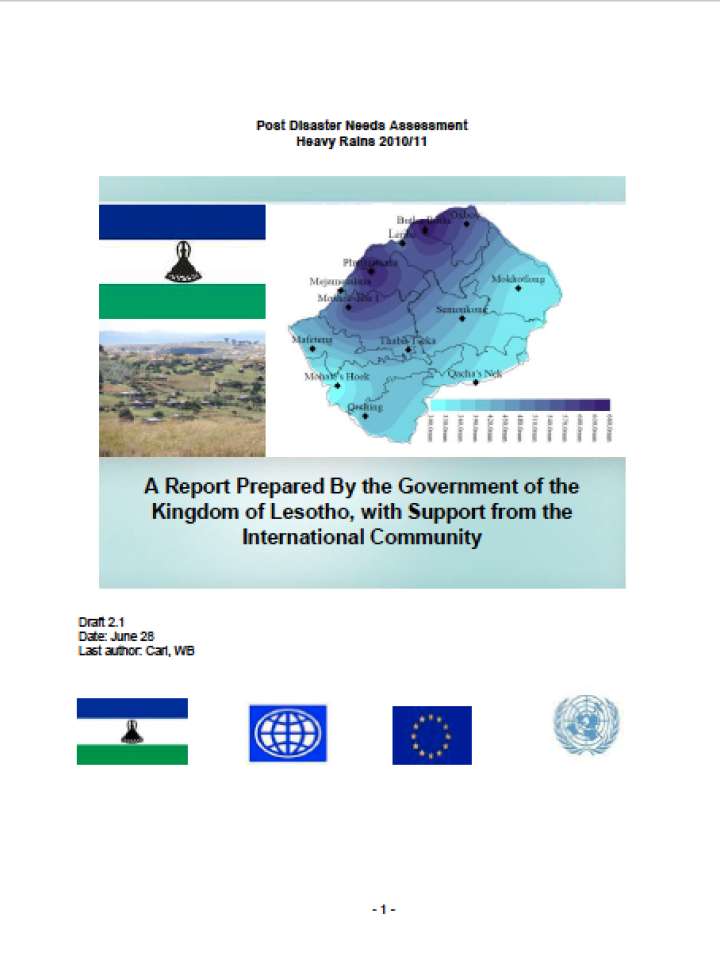
This PDNA examines the social and economic damage caused by a series of extreme weather events between December 2010 and February 2011 in Lesotho. A disaster recovery framework with guiding principles for reconstruction and DRR programs is included.
Lesotho - government
United Nations Development Programme (UNDP)
Global Facility for Disaster Reduction and Recovery, the (GFDRR)
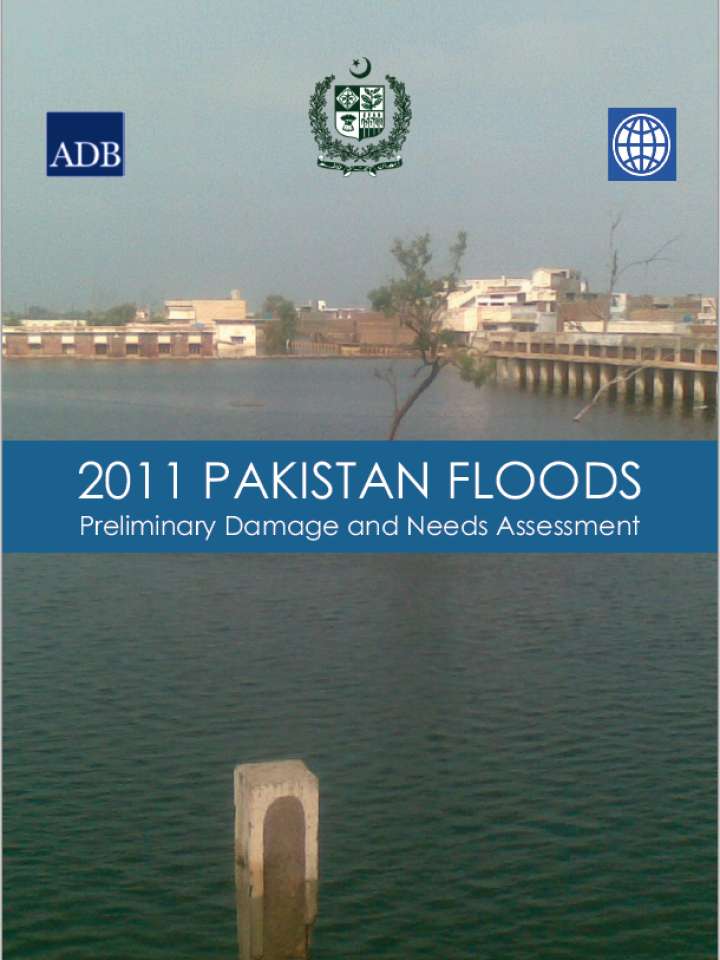
This Damage and Needs Assessment provides a summary of the damage caused by the 2011 flood in Pakistan and what is necessary for recovery in each sector, including housing, education, and infrastructure.
Pakistan - government
Global Facility for Disaster Reduction and Recovery, the (GFDRR)