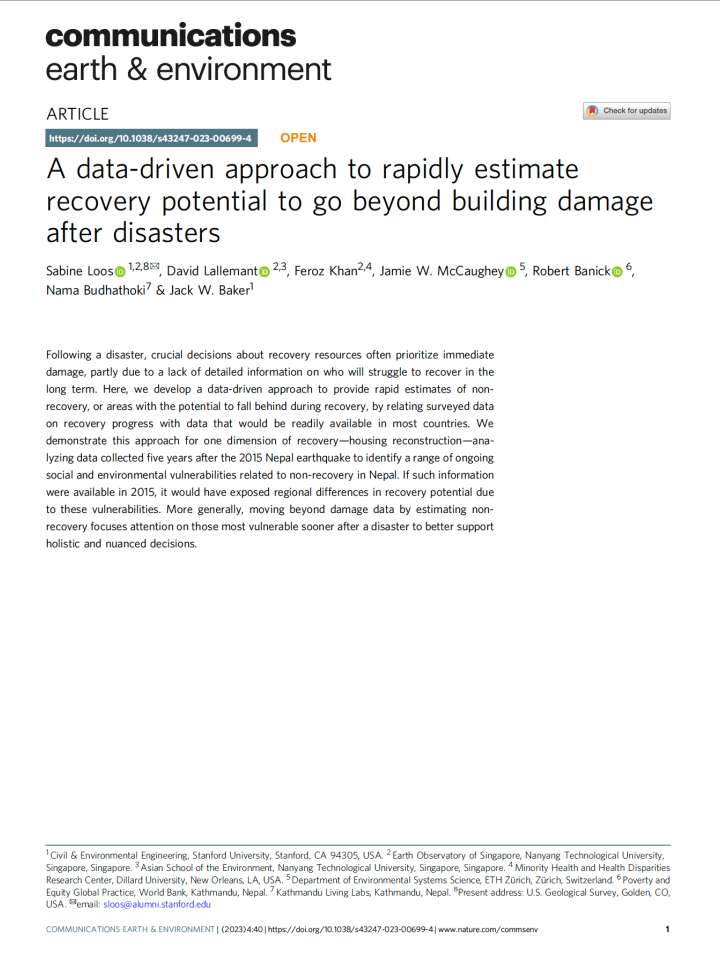
This study shifts attention beyond estimating building damage as the main source of information after an earthquake by introducing an approach to rapidly identify the obstacles that lead to the lack of household recovery progress.
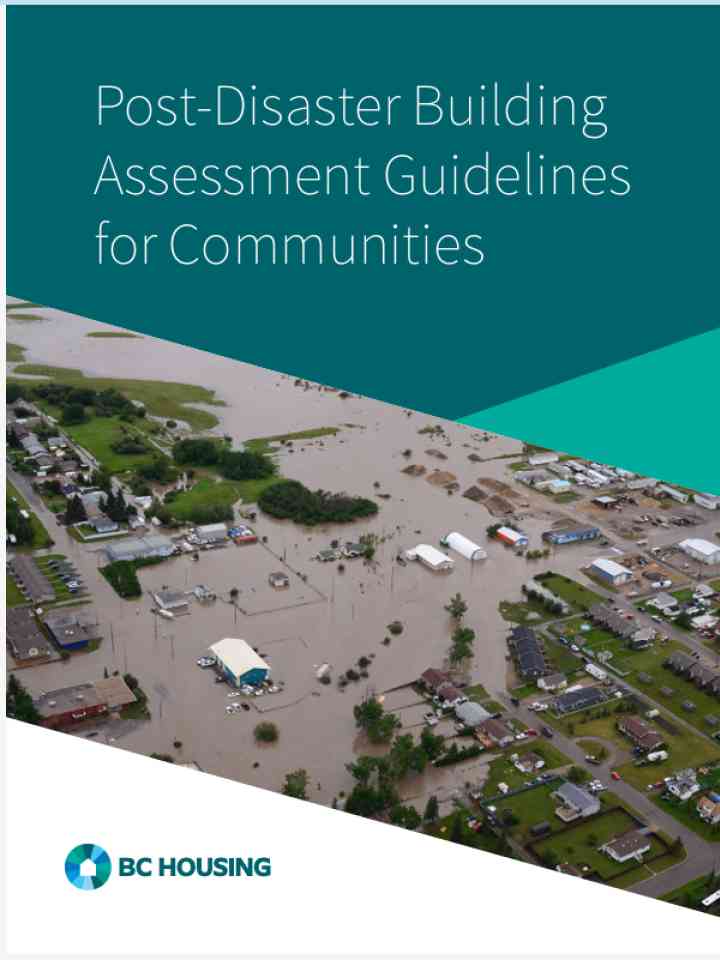
The purpose of the following Post-Disaster Building Assessment Guidelines for Communities is to support local authorities in the development and operation of their own PDBA programs.
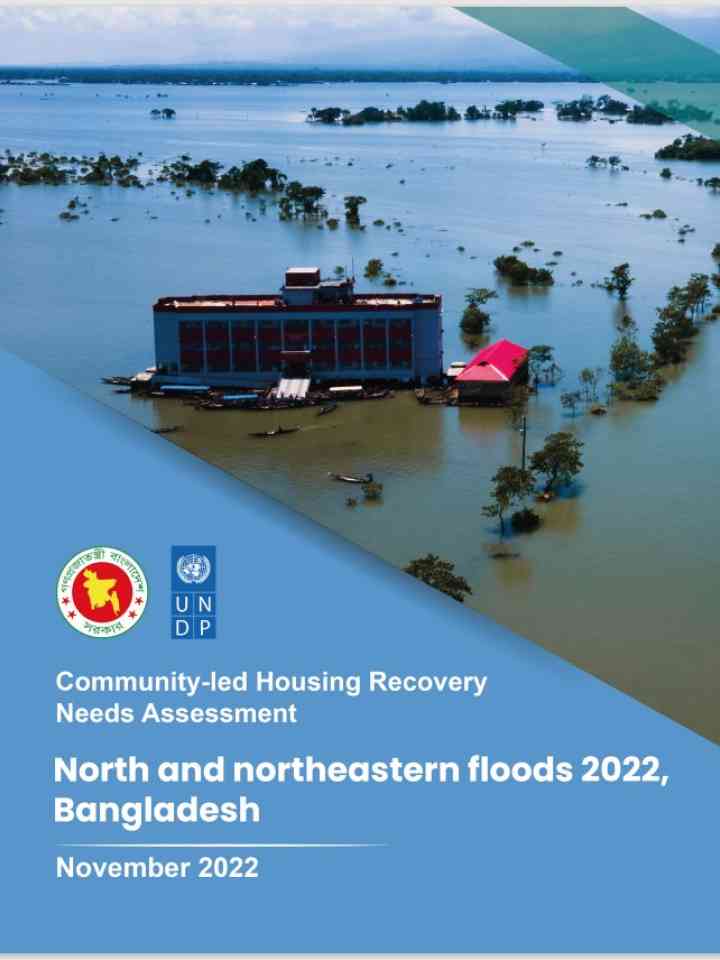
The purpose of this report is to analyze the impact of the northeastern floods of 2022 in Bangladesh on lives and livelihoods to provide strategic guidance on housing recovery and reconstruction using Build Back Better principles.
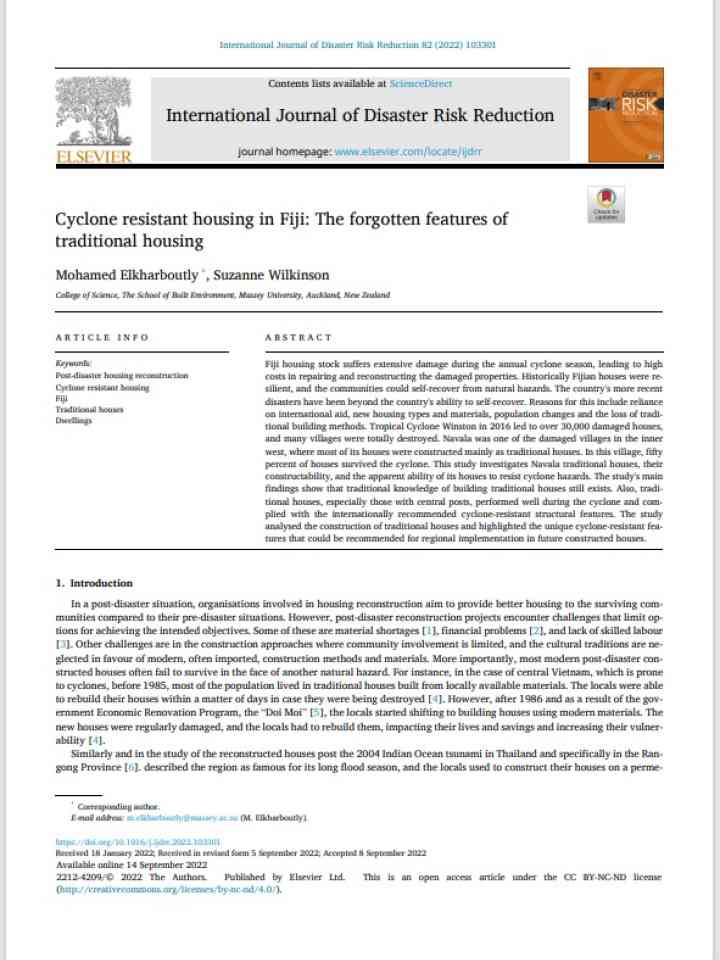
This study investigate cyclone-resistant features of traditional houses in Navala Village, which withstood 2016 Cyclone Winston. It shows the resilience benefits of traditional methods, materials and designs, suggesting adoption into current practices.
International Journal of Disaster Risk Reduction (Elsevier)
Community Development Block Grant – Disaster Recovery (CDBG-DR) Action Plan describes how the state will spend the $422 million of federal funding to support recovery from the 2020 Labor Day Fires.
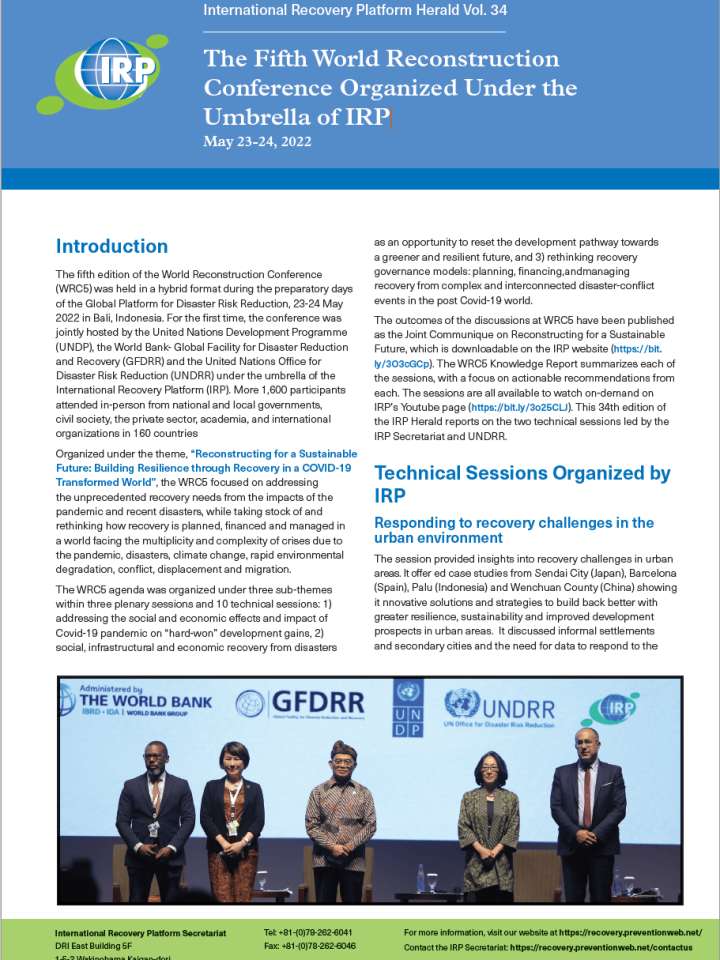
This knowledge report highlights the key lessons and recommendations emerging from the discussions during the 15 sessions of the 5th World Reconstruction Conference.
United Nations Office for Disaster Risk Reduction (UNDRR)
United Nations Development Programme (UNDP)
Global Facility for Disaster Reduction and Recovery, the (GFDRR)
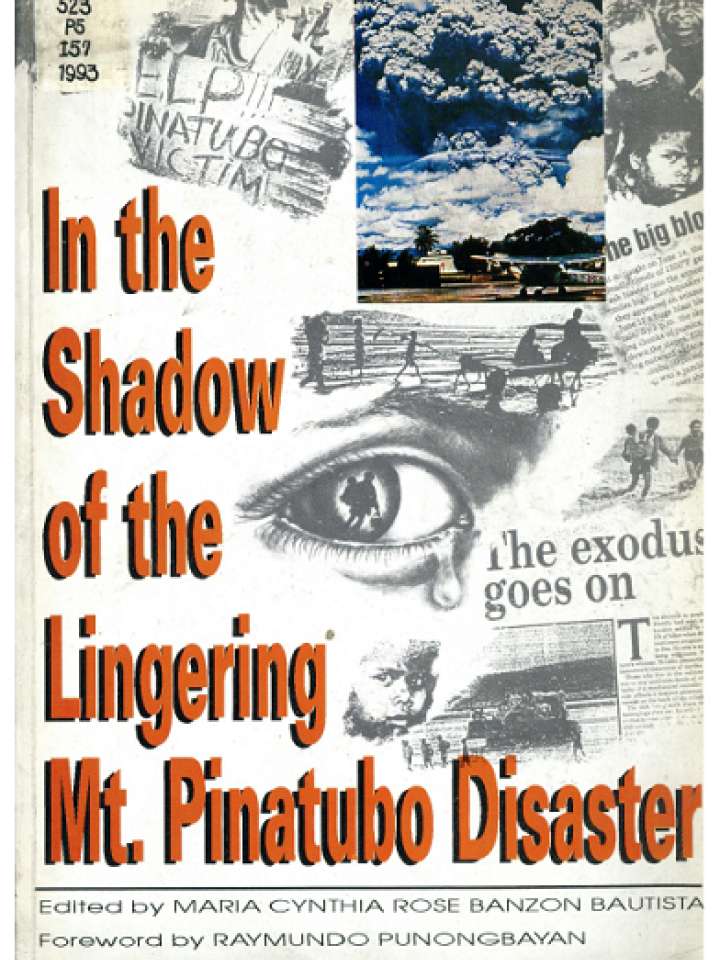
This book shares the findings of study focusing on experience of Concepcion set against backdrop of lingering Mt. Pinatubo disaster in Region III to highlight opportunities and problems which may also exist in other municipalities similarly afflicted.
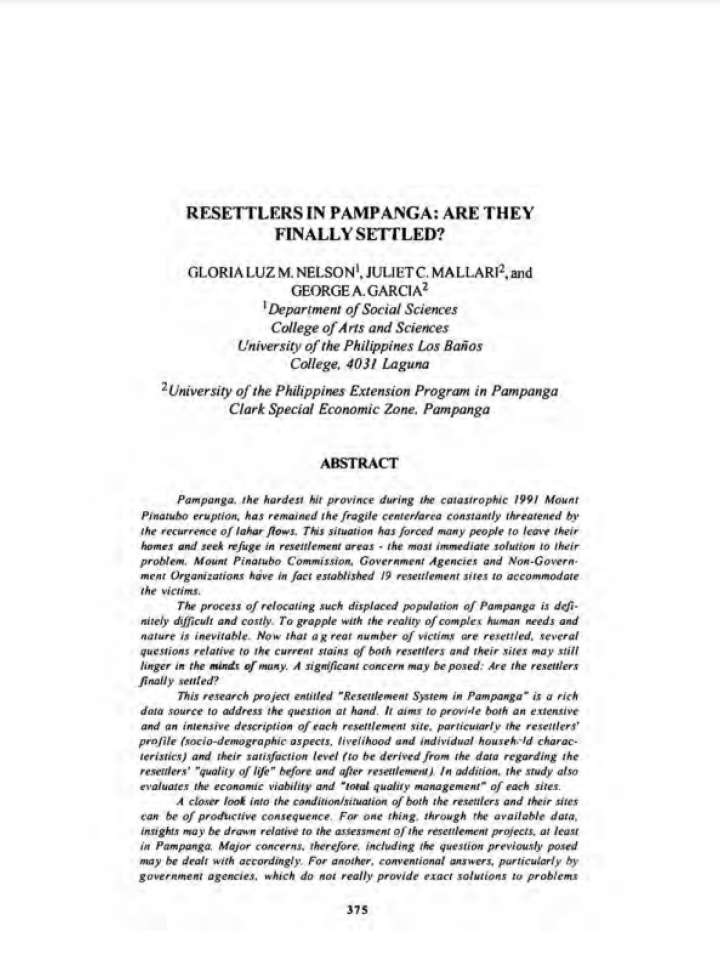
The study is an assessment of the past and present conditions of the lowland and upland Mount Pinatubo victims presently residing in the nineteen (19) resettlement sites in Pampanga, Philippines.