This review looks at the state of evidence on humanitarian and disaster risk reduction (DRR) interventions which aim to reinforce economic resilience in view of anticipated shocks and support economic recovery after a shock, both in situations of natural
This scoping study explores the resilience strategies of households in multiple livelihood systems by describing how households in Darfur have coped with conflict and other shocks over the past fifteen years. It begins with a brief description of
Special Publication (NIST SP) 1197, doi:10.6028/NIST.SP.1197:
This guide provides a standard economic methodology for evaluating investment decisions aimed to improve the ability of communities to adapt to, withstand, and quickly recover from disasters
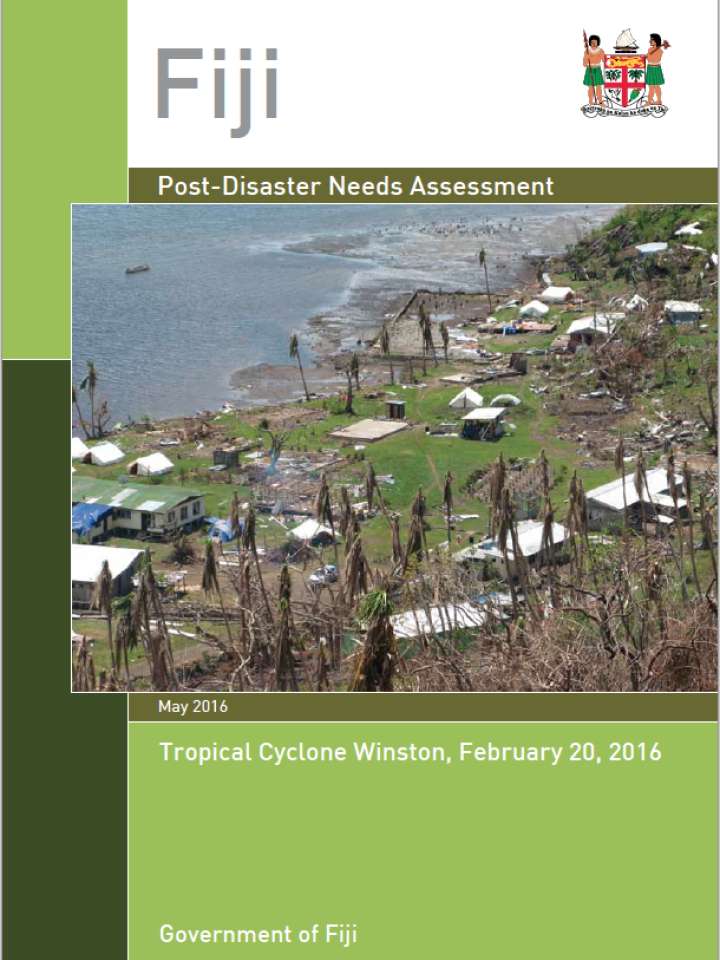
This PDNA covers the damage and losses across various sectors following Tropical Cyclone Winston that struck Fiji in 2016. A summary of recovery, reconstruction, and resilience needs are included in the report.
Fiji - government
Global Facility for Disaster Reduction and Recovery, the (GFDRR)
This PDNA covers the damage and losses across various sectors following heavy rainfall and flooding in Vietnam in 2016. A recovery strategy proposing a long-term plan to strengthen the country’s preparedness for future disasters.
Sri Lanka - government
Global Facility for Disaster Reduction and Recovery, the (GFDRR)
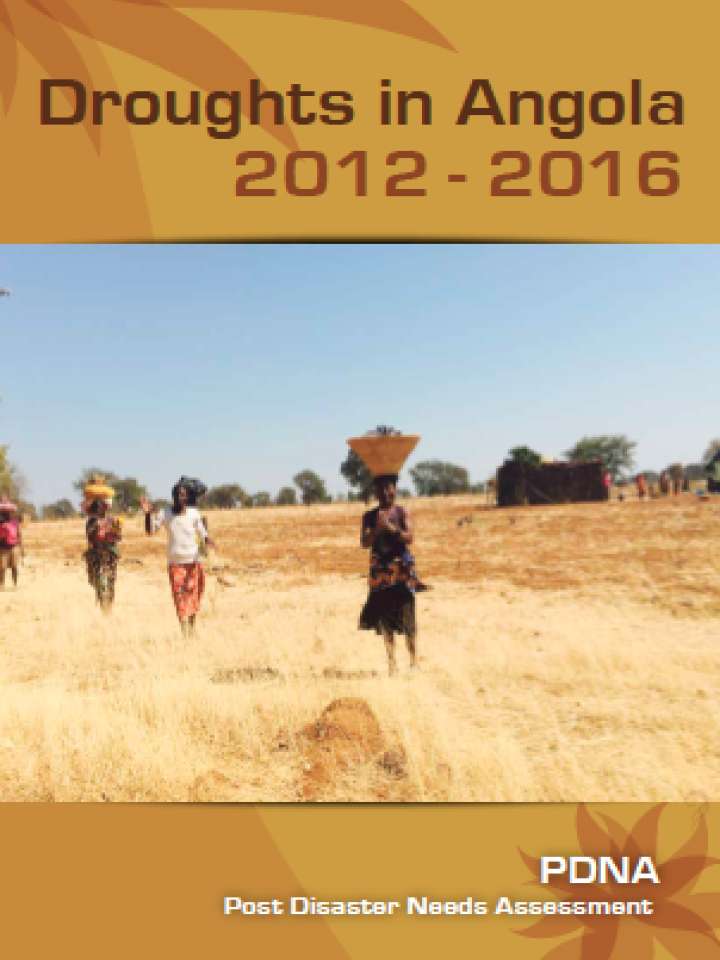
This PDNA examines the impact of the prolonged drought from 2012 to 2016 in Angola on the three southern provinces Cunene, Namibe and Huíla. It provides a recovery strategy and key interventions for each of the three provinces.
Angola - government
Global Facility for Disaster Reduction and Recovery, the (GFDRR)
This post-earthquake assessment on food security, livelihoods and early recovery was conducted in September and October 2015 both as a monitoring exercise and to further inform broader early recovery efforts identified as priorities in the Post-Disaster Needs Assessment, including food security, livelihoods, agriculture, service access and protection.
In this methodology manual, the Post-Event Review Capability (PERC) process is explained for individuals and organizations looking to conduct a systematic and holistic evaluation of a disaster. This manual is aimed to disaster risk practitioners and
International Institute for Applied Systems Analysis
Institute for Social and Environmental Transition - International (ISET)
Two years after the typhoon ravaged coastal and farmland communities, the people who survived the storm -the farmers and fishers- are well on the road to recovery. This book is a tribute to their resilience and FAO's work together to build back better their agricultural livelihoods after suffering such devastating losses.
Food and Agriculture Organization of the United Nations (FAO)
This volume of Human Organization is dedicated to a special issue on applied anthropology of risk, hazards, and disasters. It includes articles on: (i) Applied Anthropology of Risk, Hazards, and Disasters