This report presents an overview of the current situation in the 14 most affected districts by the 2015 Nepal Earthquake and UNICEF's work with children and their communities to ensure reconstruction with resilience.
This brief is part of a series highlighting the World Bank's achievements in disaster risk management initiatives. It presents efforts undertaken by the government of Vanuatu, with support from GFDRR and the World Bank, to recover after the destructive
Global Facility for Disaster Reduction and Recovery, the (GFDRR)
This paper considers the successes and challenges of the response to the April 2015 Nepal earthquake so far, and looks at what must be done to ensure that Nepal recovers in a way which makes it more resilient and more equitable.
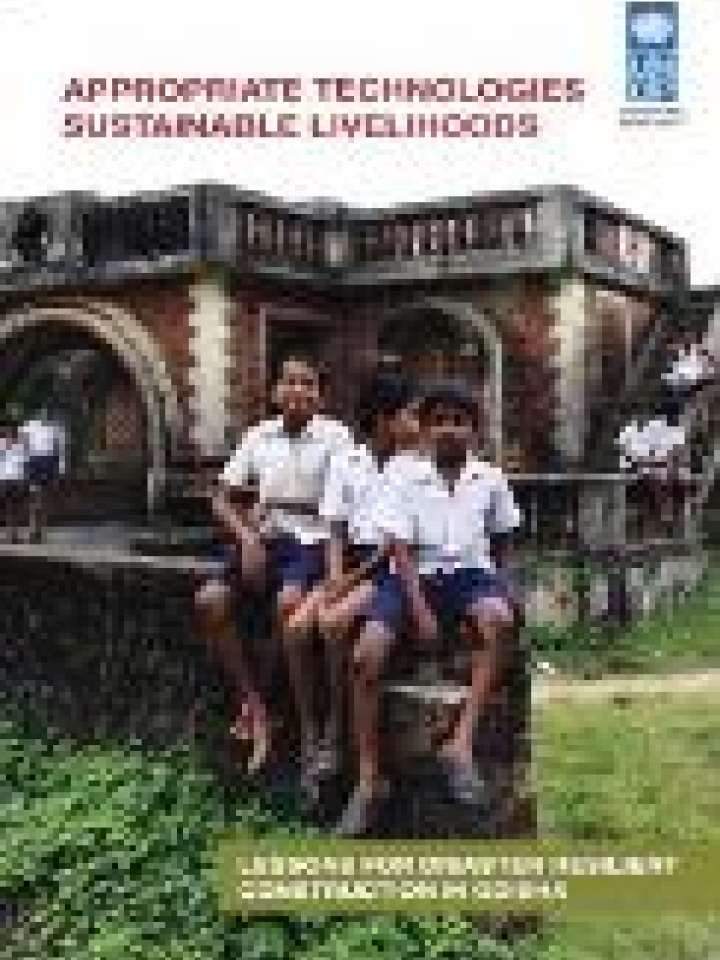
This publication outlines results from a UNDP partnership with the Government of Odisha, that demonstrated how low-cost, disaster-resilient building technologies enabled communities to build structures that could better withstand natural disasters. The
This final report presents the outcomes of the Making Cities Resilient New Orleans-Gothenburg exchange. The exchange was part of the United Nation's Making Cities Resilient campaign and concerned with disaster resilience with particular focus on high
PLoS ONE 10(10): e0138714. doi:10.1371/journal.pone.0138714:
This paper presents the quantification of the "permanent" socio-economic impacts of the Great Hanshin-Awaji (Kobe) earthquake in 1995 by employing a large-scale panel dataset of 1,719 cities
This short document draws on development good practice and experience, both from Myanmar as well as internationally, to share ways in which the private sector can use its investments to strengthen recovery activities.
This year's study compiles the latest statistics on the size and scope of the humanitarian system and assesses overall performance and progress in the period 2012-2014. The humanitarian system’s performance is assessed within its core functions of
Active Learning Network for Accountability and Performance (ALNAP)
This book identifies and recommends recovery practices and novel programs most likely to impact overall community public health and contribute to resiliency for future incidents. It makes the case that disaster recovery should be guided by a healthy community vision, where health considerations are integrated into all aspects of recovery planning before and after a disaster, and funding streams are leveraged in a coordinated manner and applied to health improvement priorities.