This report relates the experiences of those who survived the Great East Japan Earthquake and Tsunami using information gathered at a workshop which included field visits and interviews with local representatives.
The strong main shock of the Great East Japan Earthquake (GEJE) of March 11, 2011, caused little damage to buildings. This document is a knowledge note for structural measures of building performance.
World Bank, the
Global Facility for Disaster Reduction and Recovery, the (GFDRR)
The preparation of this National Progress Report has been undertaken within the framework of the biennial 2011-13 HFA Monitoring and Progress Review process, facilitated by UNISDR and ISDR System partners.
General Secretariat for Civil Protection of Greece
The brochure provides an outline of relevant Joint Research Centre (JRC)'s projects and activities in disaster resilience, in particular prevention and preparedness measures, in collaboration with the European Commission's Monitoring and Information
This toolkit is intended for education sector planners, policy-makers and program developers as well as humanitarian assistance providers, and advocates of universal education. It is intended to be useful for developing disaster resilience through the
The preparation of this National Progress Report has been undertaken within the framework of the biennial 2011-13 HFA Monitoring and Progress Review process, facilitated by UNISDR and ISDR System partners.
This document includes a set of 32 notes grouped into six thematic clusters: (i) structural measures; (ii) non-structural measures; (iii) emergency response; (iv) reconstruction planning; (v) hazard and risk information and decision making; and (vi) economics of disaster risk, risk management, and risk financing.
World Bank, the
Japan - government
Global Facility for Disaster Reduction and Recovery, the (GFDRR)
This law prescribes the basics for the organization of seismic protection in the Republic of Armenia and regulates the provisions connected with them. Specific disaster risk reduction provisions include: chapter 4 which covers assessment and reduction of
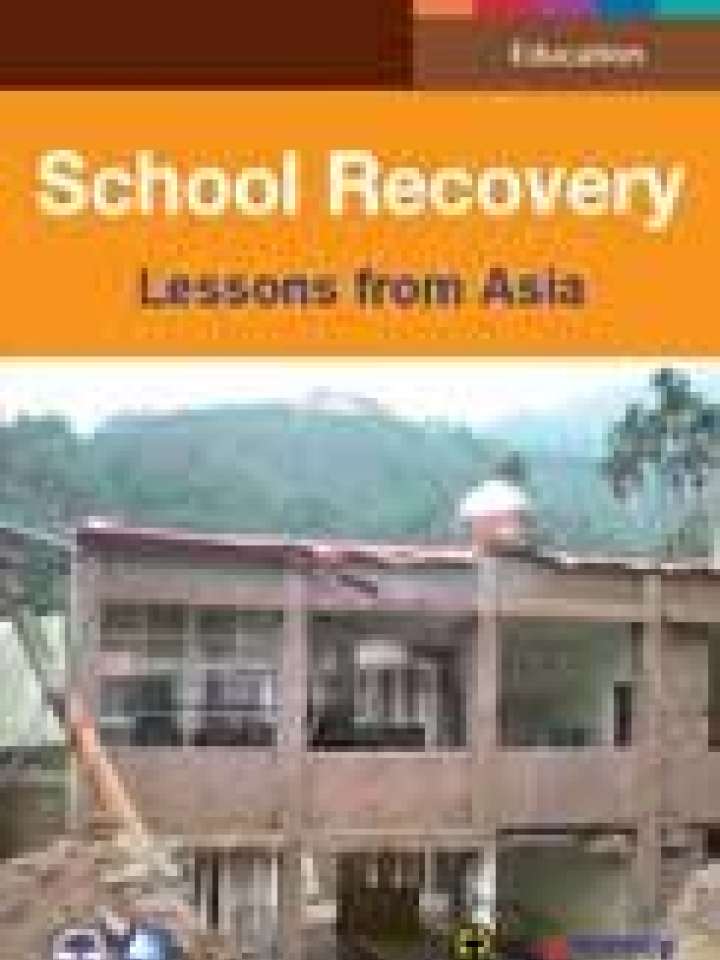
This publication provides a compilation of 25 case studies of schools from 12 countries affected by 6 different hazards in an effort to understand the recovery processes of schools from natural disasters. It links the recovery lessons to the Hyogo Framework for Action (HFA) in the education sector (E-HFA) through sixteen tasks that constitute a framework for the integrated approach of disaster risk reduction in schools. It goes beyond the school building or education, and looks at the comprehensive way of disaster risk reduction in the education sector.
Graduate School of Global Environmental Studies, Kyoto University 地球環境学堂・地球環境学舎・三才学林
This document presents the key lessons learned from a team of experts reassembled to evaluate Japan’s long-term efforts to recover from the Great Eastern Japan Earthquake and to prepare for future catastrophes. Based on extensive literature and interviews with Japanese officials and experts, it identifies four critical areas that affect response to a catastrophe: (i) recovery and resiliency of critical infrastructure, (ii) environmental remediation, (iii) compensation and disaster assistance, and (iv) population resiliency. In each area, it makes key observations, determines findings, and develops recommendations for learning from Japan’s experience.