This study looks at whether interventions to improve building practices, combined with community engagement, have resulted in safer schools and communities in view of the effects of the earthquake on Nepal’s educational infrastructure.
This brief is part of a series highlighting the World Bank's achievements in disaster risk management initiatives. After Tropical Cyclone Ian swept through the Pacific Island nation of Tonga in 2014, the government, the World Bank, and the Global Facility
Global Facility for Disaster Reduction and Recovery, the (GFDRR)
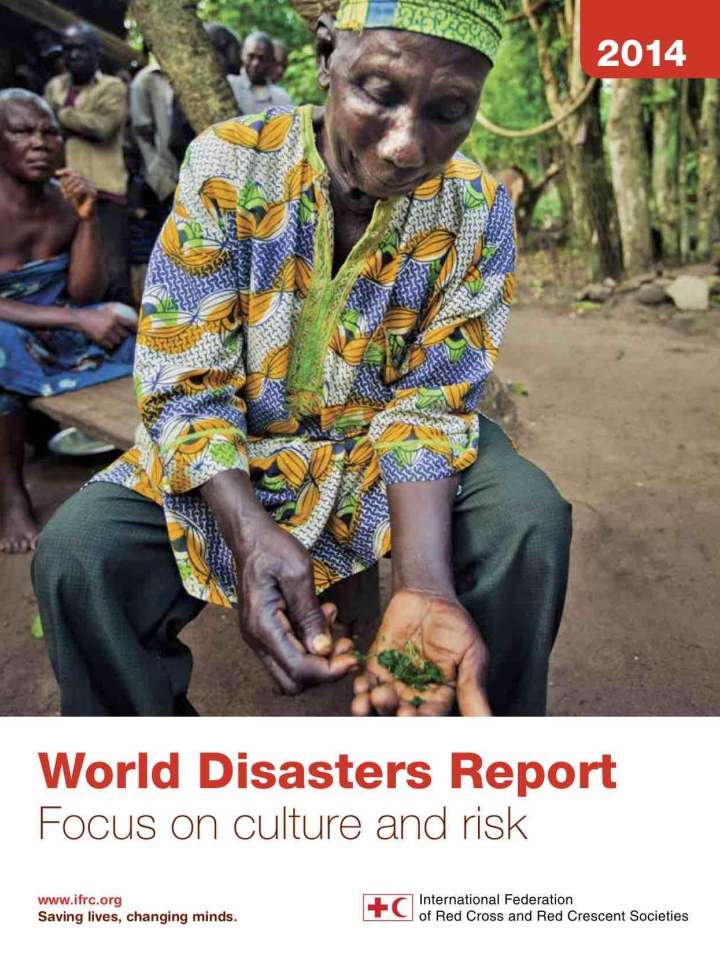
This year’s World Disasters Report focuses on culture and risk. It explores the different ways in which culture affects disaster risk reduction and climate change adaptation and how disasters and risk influence culture. It examines why people choose to
International Federation of Red Cross and Red Crescent Societies (IFRC)
This paper presents a summary of lessons learned to date in building and retrofitting housing in Haiti following the January 12, 2010 earthquake, with the intent of influencing the implementation of future post-disaster housing reconstruction programs in
This paper builds on the hypothesis that a successful post-2015 framework for disaster risk reduction (DRR) needs to better address underlying risk factors over a long timeframe and engage directly more pertinent actors such as local government leaders and the private sector. The paper explores the possible priority issues (the "substance") that should be highlighted in the post-2015 framework for DRR, setting the parameters for who (the "actors") and how (the "form") the substance should be included and the actors engaged.
United Nations Office for Disaster Risk Reduction (UNDRR)
A comprehensive plan that contains actionable recommendations both for rebuilding the communities impacted by Sandy and increasing the resilience of infrastructure and buildings citywide.
Southasiadisasters.net issue no. 98, October 2013:
This issue builds on the experience of the 2011 earthquake in Sikkim. It focuses primarily on the recovery and rehabilitation of the Indian state of Sikkim following the 18 September 2011 earthquake
This handbook seeks to unpack the problems that many organizations are confronted with, while providing step-by-step guidance on how to design and implement housing reconstruction programmes in cities. It describes the specific dimensions of reconstruction and rehousing strategies, providing context-based options that have proven successful in recent disasters. It also incorporates risk-reduction measures within reconstruction methodology in order to prepare for any future disaster.
International Federation of Red Cross and Red Crescent Societies (IFRC)
Skat - Swiss Resource Centre and Consultancies for Development
This report relates the findings of the Federal Emergency Management Agency's (FEMA) Mitigation Assessment Team (MAT) who assessed the damage in Louisiana caused by Hurricane Issac in 2012. It is comprised of an executive summary and six chapters: (i)