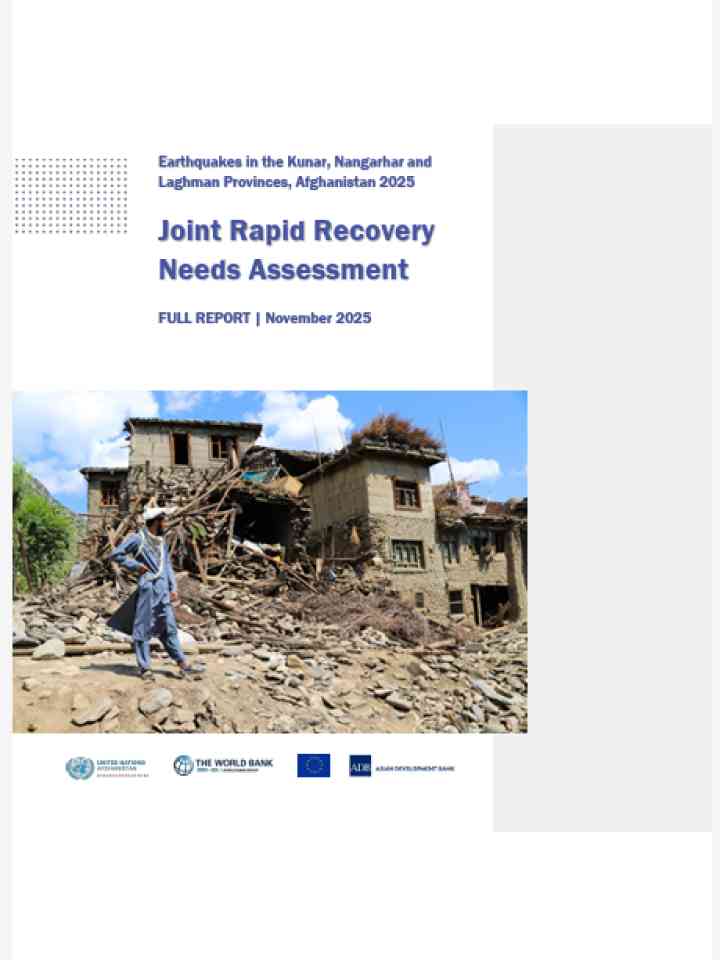
The report presents the Joint Rapid Recovery Needs Assessment (JRRNA) following the August 2025 earthquake in eastern Afghanistan, outlining damage, impacts, and priority recovery needs across key sectors.
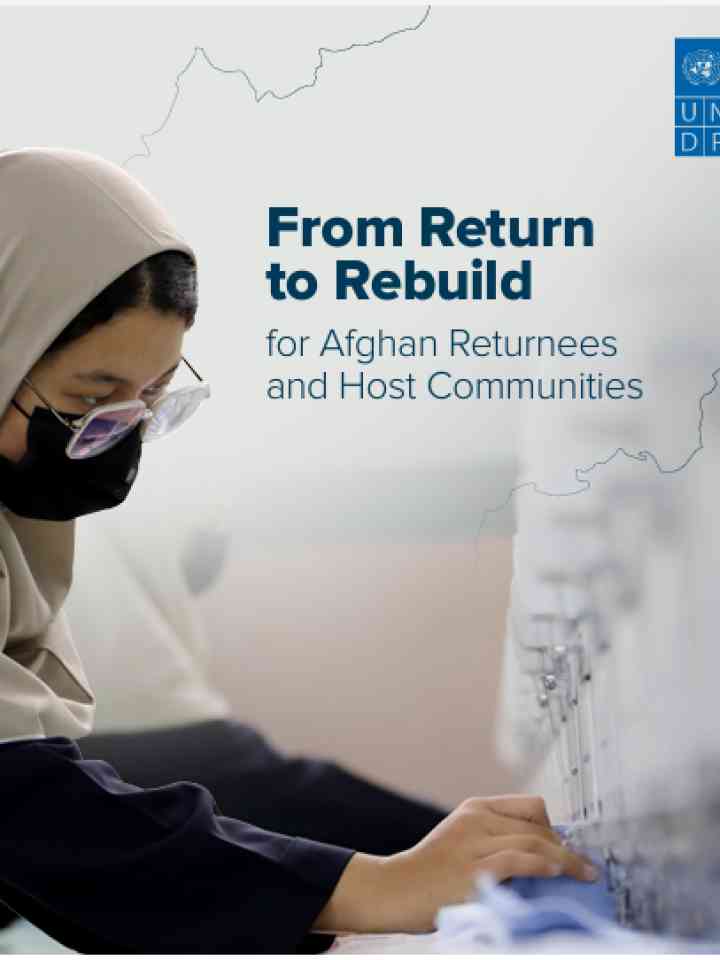
This policy paper analyzes the socio-economic pressures facing Afghan returnees and host communities amid large-scale returns, climate shocks, and earthquakes, and proposes area-based recovery solutions to strengthen resilience and social cohesion.
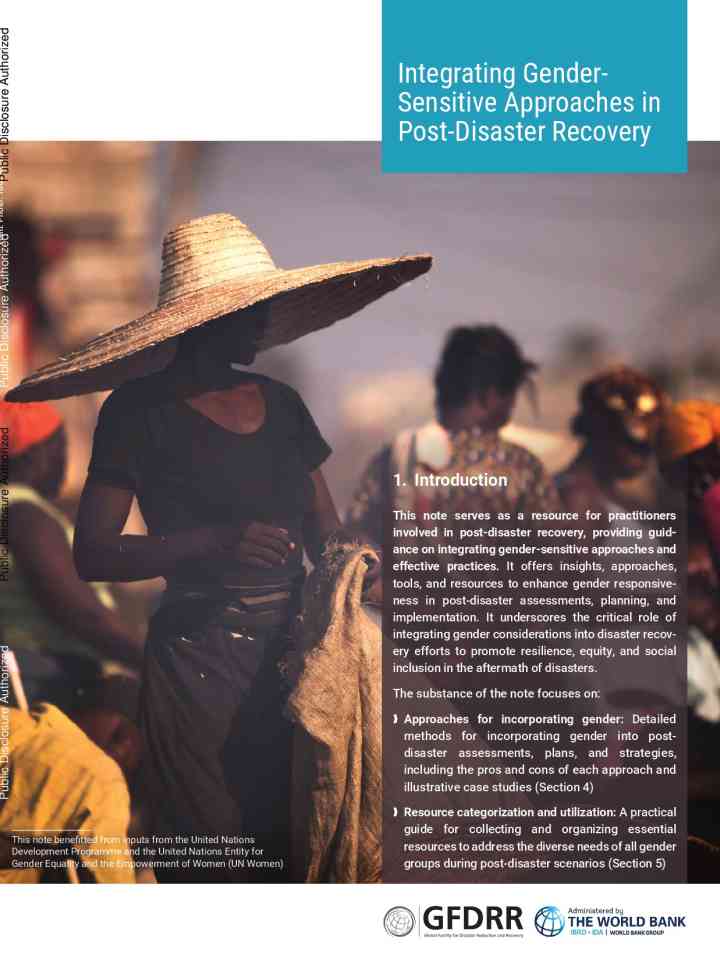
This note underscores the critical role of integrating gender considerations into disaster recovery efforts to promote resilience, equity, and social inclusion in the aftermath of disasters.
The report outlines efforts to support vulnerable groups in Lebanon, focusing on survivors of GBV, mental health challenges, and persons with disabilities, while enhancing NGO capacity and coordination with government agencies.
This report presents the results of the Sectoral Recovery Capacity Assessment undertaken in Saint Lucia to assess the capacity of the tourism sector to plan, design, implement, monitor, and evaluate resilient and inclusive recovery projects.
World Bank, the
Global Facility for Disaster Reduction and Recovery, the (GFDRR)
This report assesses the capacity of the agriculture sector to plan, design, implement, monitor, and evaluate climate resilient, gender responsive and disability inclusive recovery projects in Guyana.
World Bank, the
Global Facility for Disaster Reduction and Recovery, the (GFDRR)
This is the thematic review of gender equality and social inclusion in disaster risk reduction in Pacific Island countries submitted to UNDRR to inform the Midterm Review of the Sendai Framework 2015-2030.
United Nations Office for Disaster Risk Reduction - Regional Office for Asia and Pacific
This brief, updating the previous DRM brief published in 2015, contains guidance on ethics and safety and resources for conducting a rapid situation analysis regarding violence against women and girls.
Global Facility for Disaster Reduction and Recovery, the (GFDRR)
WFP has been supporting climate risk insurance as an important piece of the strategy for building women’s economic empowerment. It presents the story of women that have access to WFP’s climate risk insurance and related interventions.
This note documents good practices to prevent, mitigate, and respond to GBV in post-disaster contexts, utilizing the World Bank-financed Central Sulawesi Rehabilitation and Reconstruction Project (CSRRP) as a case study.