This report evaluates local and federal plans for strengthening community resiliency post-Sandy and offers guidance on post-disaster rebuilding and building in anticipation of future disasters in a way that helps preserve the environment, boost economic prosperity, and foster a high quality of life. It contains a comprehensive, practical set of 23 recommendations focused on four areas: (i) land use and development; (ii) infrastructure, technology and capacity; (iii) finance, investment and insurance; and (iv) leadership and governance.
This paper reviews the causes of the "positive but limited impact" of the Hyogo Framework for Action 2005-2015 (HFA), as per BOND Disaster Risk Reduction Working Group, namely: its duration, lack of “ownership” outside the humanitarian sector, the lack of
The Plan prepared by the National Emergency Commission and the Dominican Civil Defense has its origin in Law 147-02 and the National Risk Management Plan and the National Plan for the Reduction of Seismic Risk.
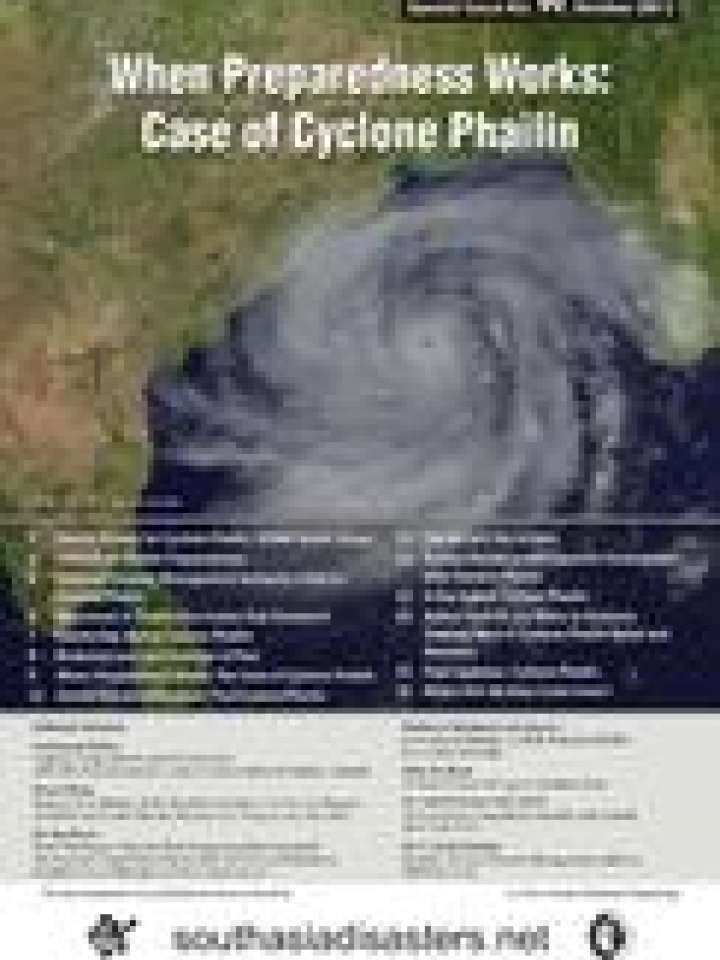
Southasiadisasters.net issue no. 100, November 2013:
This 100th issue takes stock of a wide variety of issues from the field of disaster risk reduction. It contains articles covering emerging issues such as the rebuilding process in Uttrakhand, building
This paper builds on the hypothesis that a successful post-2015 framework for disaster risk reduction (DRR) needs to better address underlying risk factors over a long timeframe and engage directly more pertinent actors such as local government leaders and the private sector. The paper explores the possible priority issues (the "substance") that should be highlighted in the post-2015 framework for DRR, setting the parameters for who (the "actors") and how (the "form") the substance should be included and the actors engaged.
United Nations Office for Disaster Risk Reduction (UNDRR)
This action plan gives an overview of the situation at the national, international and bilateral levels, few days after the category 5 Typhoon Haiyan (locally known as Yolanda) made a direct hit on the Philippines, devastating areas in 36 provinces.
United Nations High Commissioner for Refugees (UNHCR)
This book explains key lessons learned from diverse disaster situations and analyzes them within the framework of governance, education, and technology, providing a framework for disaster recovery as a development opportunity. In post-disaster situations
This report is intended to disseminate the lessons learned from the devastating experiences of the Great East Japan Earthquake with Mw 9.0 occurred on March 11, 2011, for the sake of future societies. It focuses on topics related to the earthquake and tsunami in terms of the Hyogo Framework for Action 2005–2015 (HFA) five priorities for action, which serve as guidelines to reduce future disaster damage for every country or region, as well as from the academic view-points of professors at the International Research Institute of Disaster Science (IRIDeS), Tohoku University.
A comprehensive plan that contains actionable recommendations both for rebuilding the communities impacted by Sandy and increasing the resilience of infrastructure and buildings citywide.