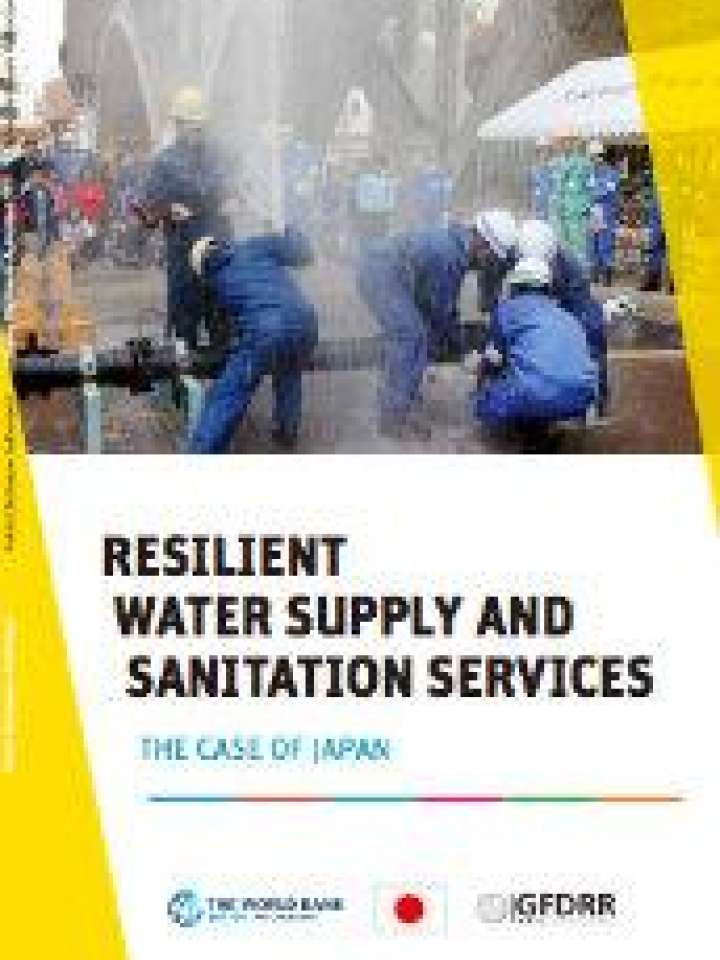
This report outlines the ways Japan has built the resilience of its water supply and sanitation (WSS) services through an adaptive approach based on lessons learned from past natural disasters.
Global Facility for Disaster Reduction and Recovery, the (GFDRR)
This research was motivated by the lack of reconstruction progress in urban settlements one year after the earthquakes and conducted ethnographic fieldwork in five urban settlements over a period of 18 months.
International Institute for Environment and Development (IIED)
This briefing is part of the project 'Longterm implications of humanitarian responses: a case of Chennai'. The research was conducted in 2016 by the Indian Institute for Human Settlements (IIHS) and Madras Institute for Development Studies (MIDS).
International Institute for Environment and Development (IIED)
Can cutting edge innovations that integrate disaster risk reduction with climate change adaptation transform our views on risk from the standpoint of individuals, institutions and investments that shape
This review considers the environmental conditions leading up to and during the Horse River wildfire that started on 1 May 2016 outside Fort McMurray, Alberta, evaluates the readiness and level of preparedness prior to its occurrence, and evaluates the
This report of a Post-Incident Assessment provides a review of the Government of Alberta’s support to stakeholders, emergency social services, and community evacuations during the May 2016 Wood Buffalo Wildfire and its aftermath.
This issue of Southasiadisasters.net focuses on the most important theme of Global Platform for Disaster Risk Reduction held at Cancun, Maxico. Community Based Disaster Preparedness: Enabling Communities to Manage Risks '. It primarily focuses on how CBDP