This paper presents German views on disaster risk management for sustainable development. It contains a section on linking theory and practice, which covers risk analysis, disaster preparedness, disaster prevention and mitigation, and aid and
Federal Ministry for Economic Cooperation and Development
This brochure, while providing an overview of the global context, seeks to explain what disaster risk reduction means for the International Federation and to set out a framework to help the 185 member National societies to make communities safer and more
International Federation of Red Cross and Red Crescent Societies (IFRC)
This handbook is designed to give governments and humanitarian workers the tools that they need to address the Education for All and UN Millennium Development Goals. It is the first step toward ensuring that education initiatives in emergency situations
Inter-agency Network for Education in Emergencies (INEE)
This book, consisting of two parts, the theory of Total Disaster Risk Management (TDRM) and good practices for disaster risk management, was compiled for the purpose of promoting TDRM as a comprehensive approach to disaster risk reduction worldwide.
This report summarizes the progress made and the lives helped to be transformed as a result of the five-year response and recovery program. As this report documents, significant results have been achieved in many critical areas including child protection
The main objective of the Plan is to provide the Municipality of Babahoyo and the cantonal entities with a quick guide for the COE to act in the event of an emergency associated with floods
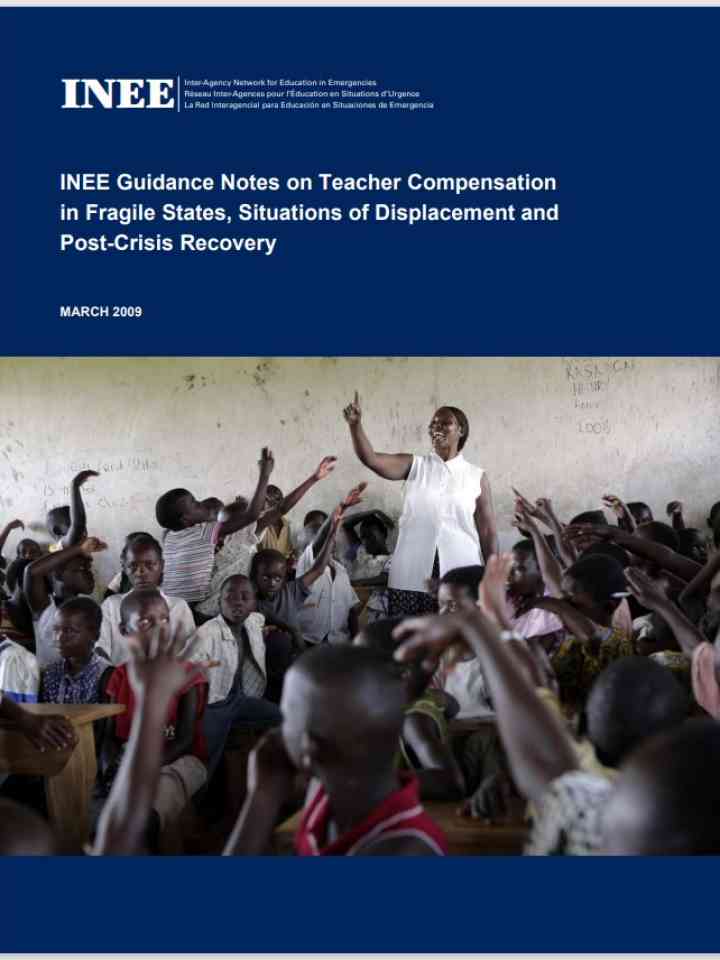
This Guidance Note provides a suggested framework for compensating teachers in fragile states, situations of displacement, and post-crisis recovery—situations where teachers are often underpaid or not paid at all.
Inter-agency Network for Education in Emergencies (INEE)
This guidebook focuses on ensuring access to quality schooling at primary and secondary levels and is addressed primarily at staff of ministries of education, including national, provincial and district level planners and managers, in countries affected by conflict or natural disasters, or hosting refugees from a neighbouring states. In incorporates conflict prevention and disaster preparedness (though not disaster prevention).
United Nations Educational Scientific and Cultural Organization - International Institute for Educational Planning