Navigation failed to load. If you are on the UNDRR office network, your browser may be blocking access to external resources. Learn how to allow access.
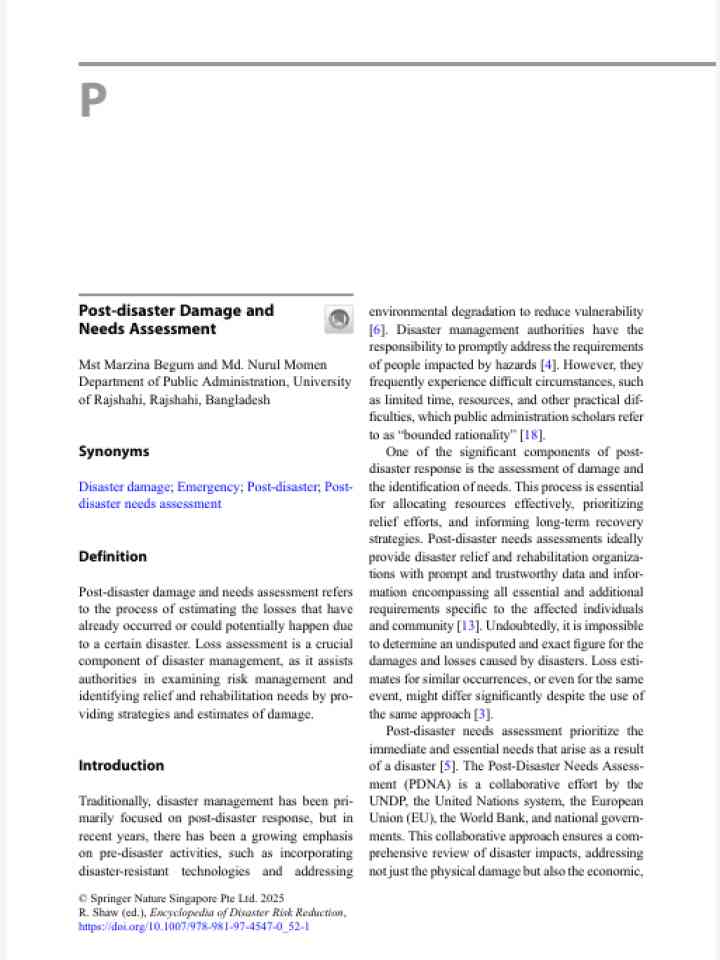
This entry explains the concept, methodology, and importance of post-disaster damage and needs assessment (PDNA) in supporting effective recovery, reconstruction, and disaster risk reduction.
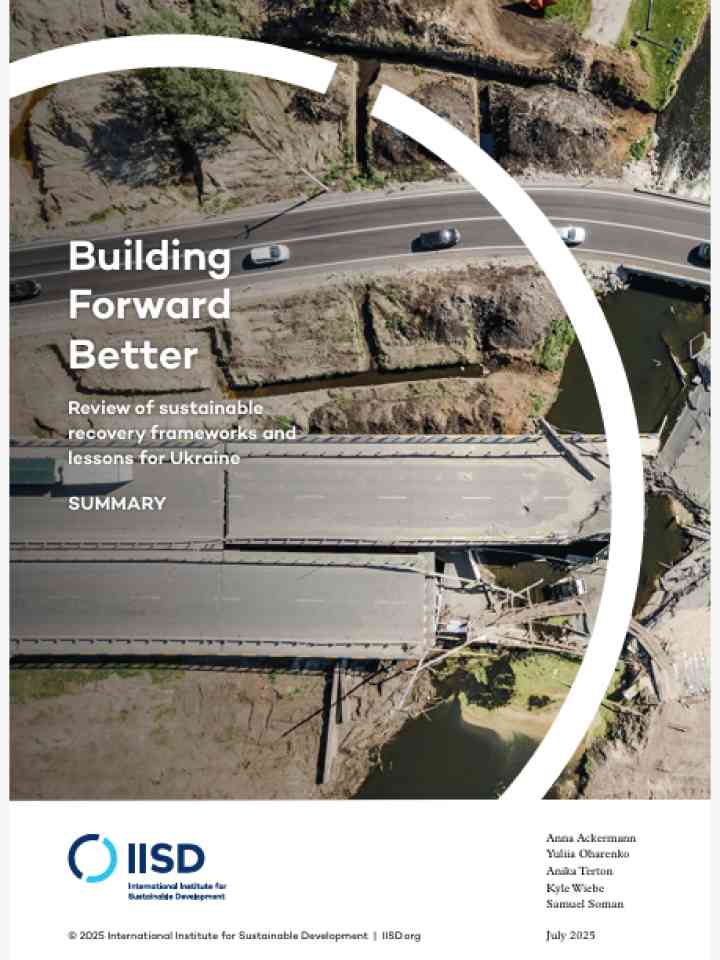
This report outlines principles, priorities, and policy options for Ukraine’s sustainable recovery, emphasizing resilience, inclusion, and alignment with long-term development and EU integration goals.
International Institute for Sustainable Development (IISD)
This note summarizes the extent of Typhoon Yagi on Myanmar and identifies key Disaster- fragility, conflict, and violence (FCV) intersections in the context of this flood event.
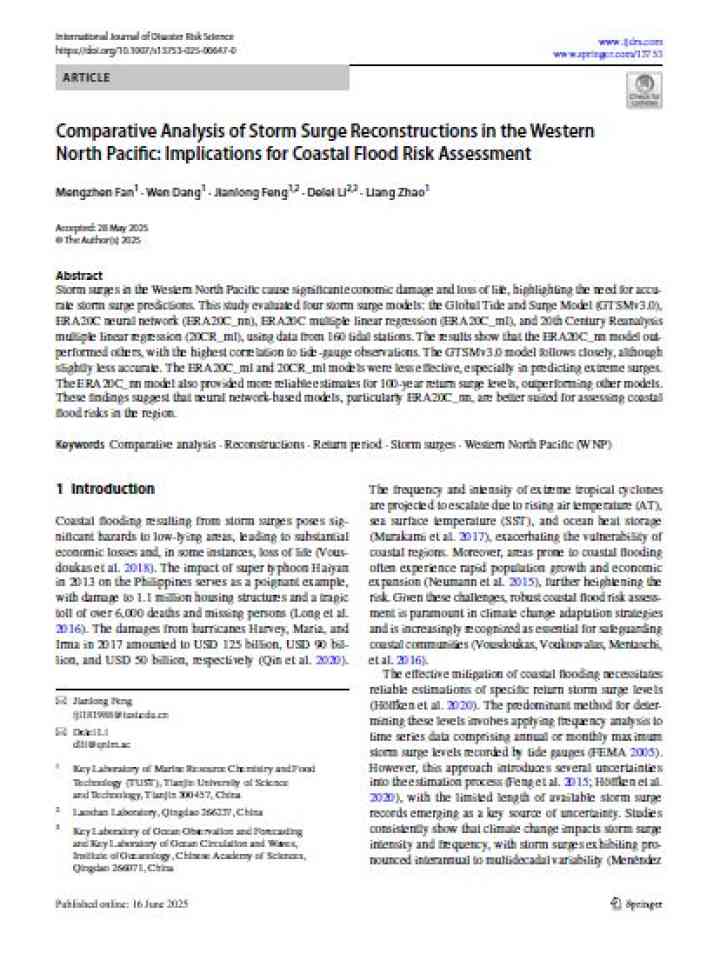
This study evaluated four storm surge models: the Global Tide and Surge Model (GTSMv3.0), ERA20C neural network (ERA20C_nn), ERA20C multiple linear regression (ERA20C_ml), and 20th Century Reanalysis multiple linear regression (20CR_ml).
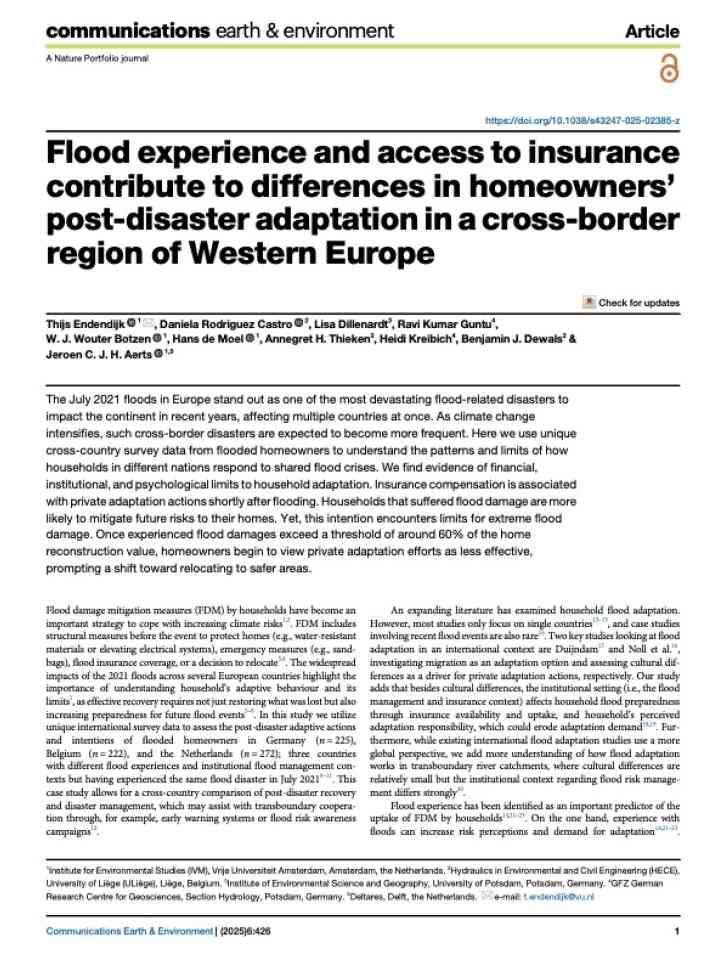
Study of 2021 Western European floods finds insurance access drives homeowner adaptation post-disaster. Severe damage (>60% home value) reduces intent to adapt, prompting relocation. Institutional, financial, and psychological limits identified.
The Priority Actions to Enhance Readiness for Resilient Recovery are designed to take joined action to enhance readiness for resilient recovery to build back better by
taking the following concrete actions to build a more resilient future for all.
United Nations Office for Disaster Risk Reduction (UNDRR)
The UNDP Sudan 2024 Annual Report documents how we continued to deliver development support throughout the year, even as violence, displacement and access constraints deepened.
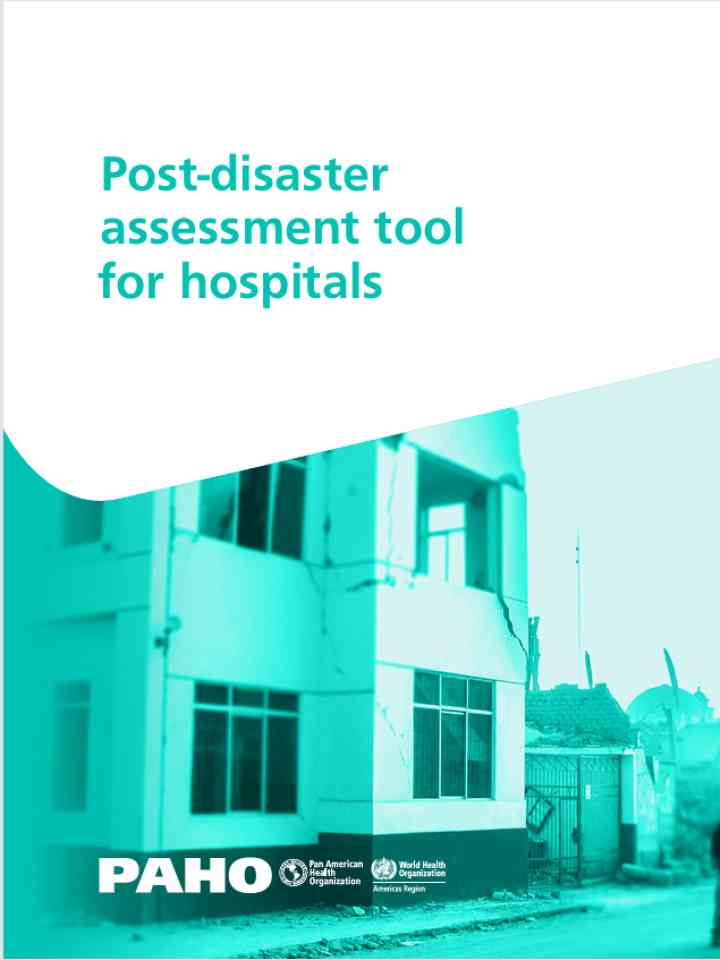
The document provides a comprehensive guide for assessing hospital infrastructure and operational capacity after disasters to prioritize recovery, rehabilitation, and reconstruction efforts efficiently.