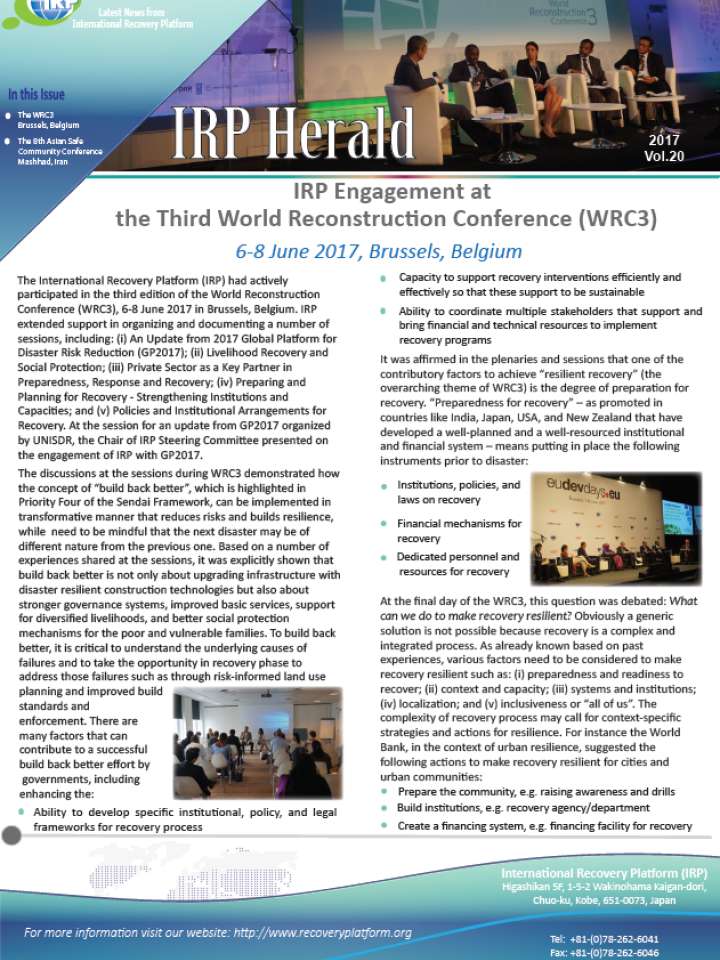
This report documents the major challenges associated with designing adaptive post-disaster private financing products and creating solutions that can reduce such barriers. It serves as a launch point for any organization beginning to think about creative
This working paper presents a dynamic small open economy model to explore the macroeconomic impact of natural disasters. In addition to permanent damages to public and private capital, the disaster causes temporary losses of productivity, inefficiencies
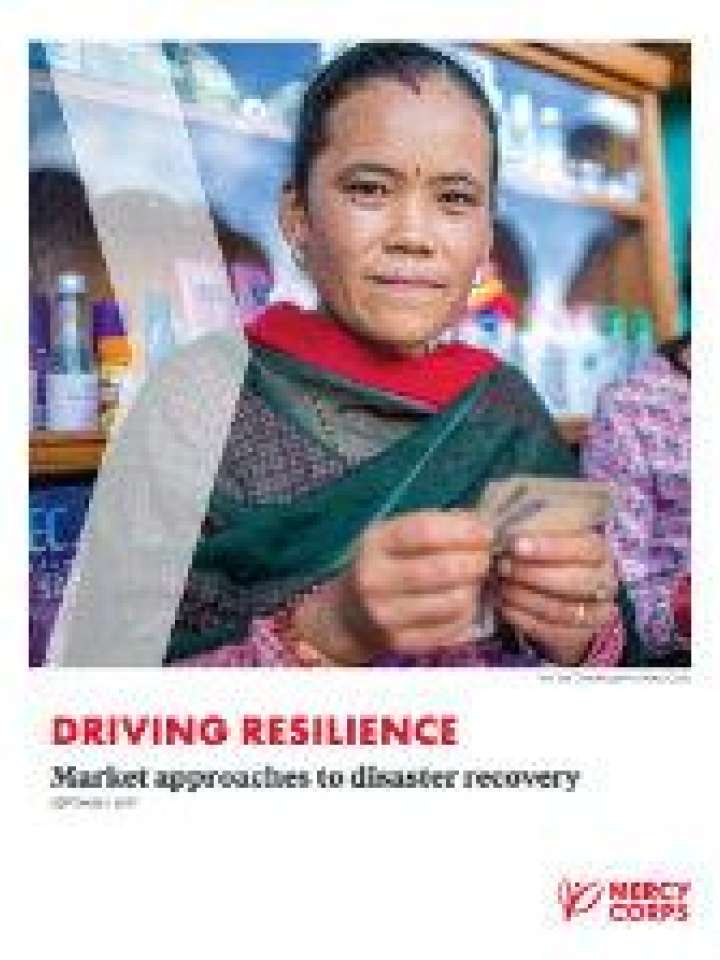
This issue brief focuses on the ways donors and emergency response practitioners can build long-term disaster resilience by working with local markets and market-based approaches during a disaster recovery and investing in long-term programming.
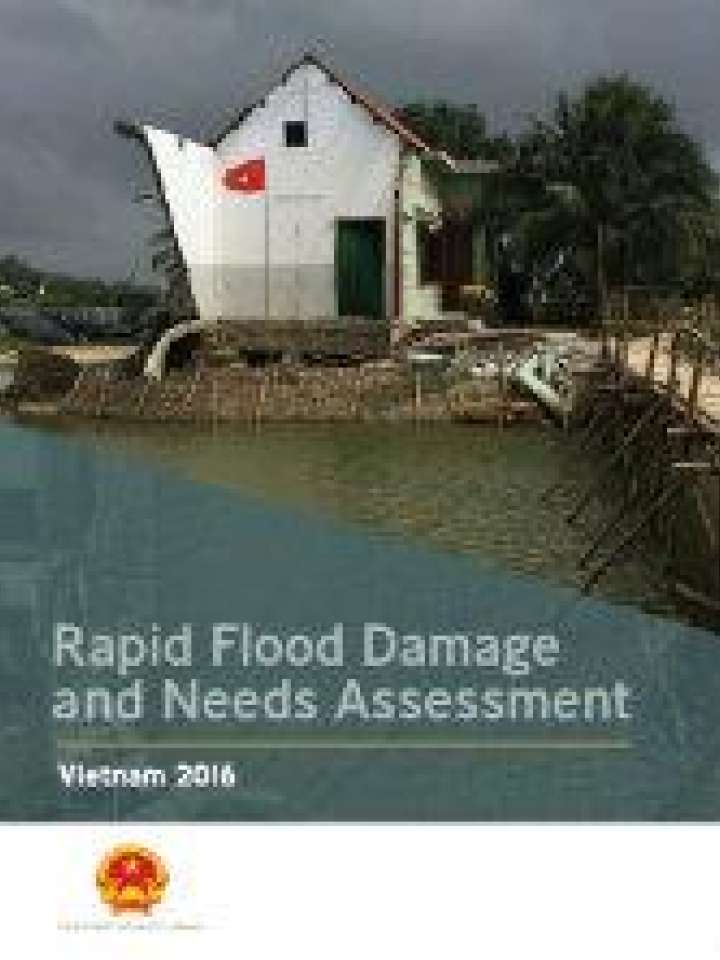
This report assesses the scale of damage of the 2016 floods in Vietnam and lays the groundwork for effective recovery and reconstruction efforts in the five priority provinces of Ha Tinh, Quang Ngai, Binh Dinh, Phu Yen and Ninh Thuan.
Global Facility for Disaster Reduction and Recovery, the (GFDRR)
This book offers recommendations and guidance to enhance the disaster resilience of the academic biomedical research community in the United States of America, with a special focus on the potential actions researchers, academic research institutions, and
National Academies of Sciences, Engineering, and Medicine, The
This publication outlines a number of potential solutions and enablers that could form part of the global response to climate and natural hazard risks. It advocates for improved risk modelling and mapping and assesses the value of risk financing. It