This special issue of the quarterly ERRA newsletter focuses on the major earthquake that struck northern Pakistan on October 8, 2005. It describes the response to the disaster, followed by the establishment of the Earthquake Reconstruction and
Earthquake Reconstruction and Rehabilitation Authority
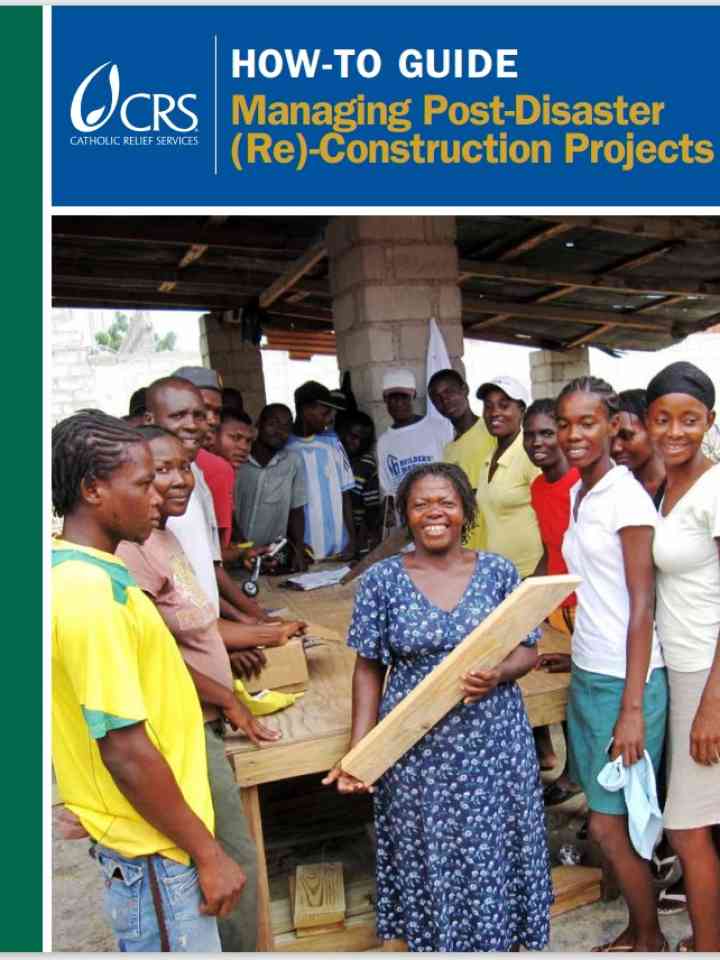
This document aims to give practical guidance on how to implement construction projects within the international relief sector/post-disaster situations.
This third volume presents the House Capacity Calculator, which is an easy-to use application that estimates required rebuilding time based on available house production capacity.
This second volume provides a summary of the national disaster housing strategy, and describes a straightforward planning approach for estimating potential losses and expediting rebuilding.
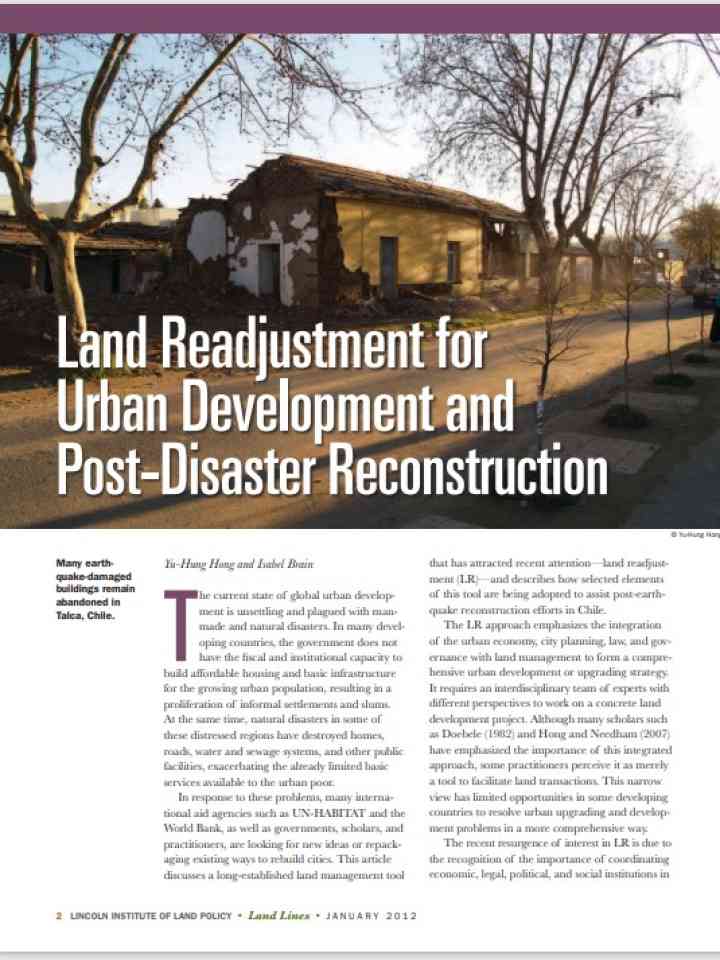
This article discusses a long-established land management tool that has attracted recent attention-land readjustment (LR)-and describes how selected elements of this tool are being adopted to assist post-earthquake reconstruction efforts in Chile.
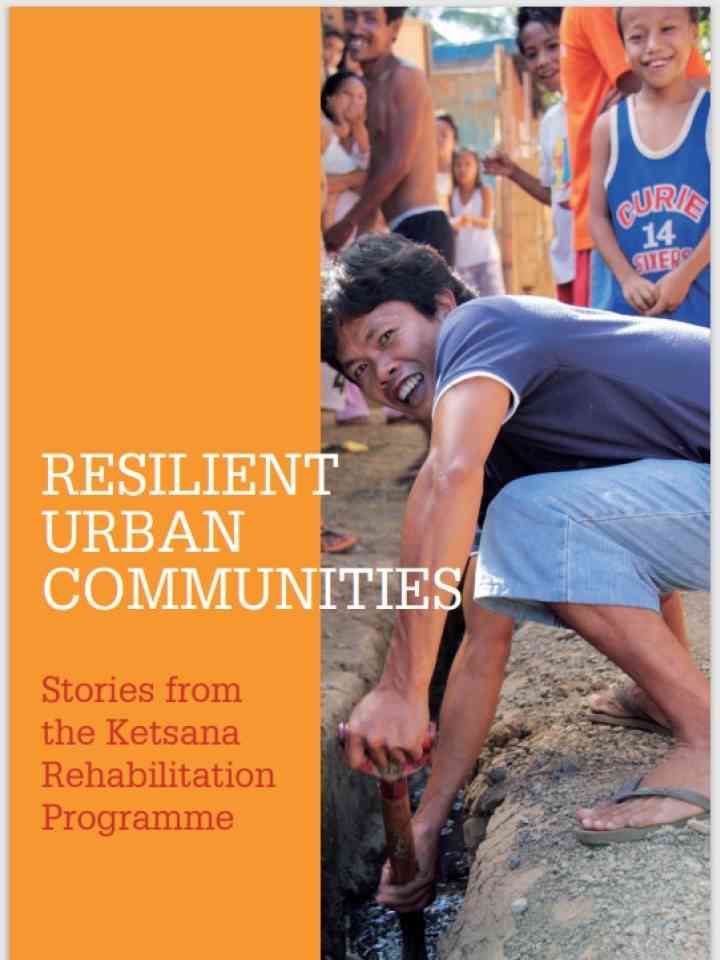
The Ketsana Rehabilitation Programme sought to “enable urban poor communities seriously affected by Typhoon Ketsana to recover from their loss and strengthen their capacities to sustain their lives and livelihoods.”
Two years after the earthquake in Haiti, this recommends for advancing the issue that nearly 500,000 internally displaced persons by increasing capacity in the land tenure system, and the modernization of the cadastral map and titling system.
This Damage and Needs Assessment provides a summary of the damage caused by the 2011 flood in Pakistan and what is necessary for recovery in each sector, including housing, education, and infrastructure.
Pakistan - government
Global Facility for Disaster Reduction and Recovery, the (GFDRR)